 Everett
 Storm Damage Roof Repair Built for Glenhaven's Climate
Glenhaven sits close enough to Puget Sound and the Snohomish County marine air that its roofs take a different kind of beating than homes further inland. It's not usually one dramatic event that causes the damage we get called out for — it's the combination of wind-driven rain off the Sound, salt-laden air working on metal fasteners and flashing, and a moss season that stretches from fall through spring. A roof that would hold up fine in a drier climate can develop real problems here within a few seasons if storm damage isn't caught and repaired correctly the first time.
This page is specifically about storm damage repair for Glenhaven homes — not a general roofing overview. We'll walk through what local storms actually do to a roof, what a correct repair involves, and how our process works when you call us after a windstorm, hail event, or a fallen branch.
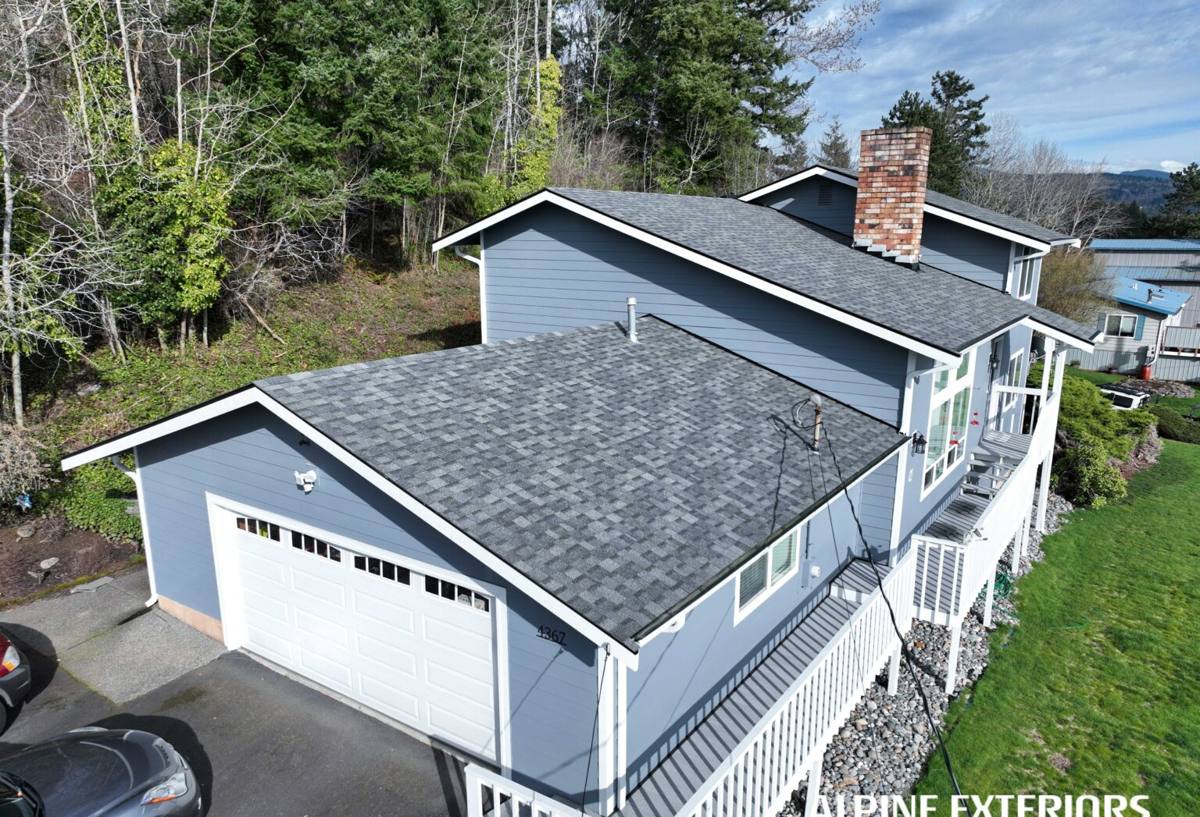
What Storms Actually Do to a Glenhaven Roof
Everett gets its share of fall and winter windstorms off the Sound, and Glenhaven's tree cover — a mix of mature conifers and deciduous trees on many lots — adds its own risk during those events. The damage we see after a storm generally falls into a few categories:
- Wind-lifted or torn shingles/panels — especially on ridgelines and roof edges where uplift is strongest.
- Flashing separation — around chimneys, skylights, and roof-to-wall transitions, often from repeated wind flexing rather than a single gust.
- Impact damage — from branches, cones, or debris, which can crack shingles or dent metal roofing without an obvious hole.
- Driving-rain intrusion — water pushed sideways under shingles or through compromised seals, which shows up as interior staining days or weeks later.
- Fastener and flashing corrosion — accelerated by the marine air, which weakens the roof's ability to resist the next storm even if this one didn't cause visible damage.
The tricky part is that storm damage often isn't obvious from the ground. A missing shingle is easy to spot; a lifted seal or a hairline flashing gap is not — and those are the issues that turn into a much bigger repair if they sit through one more rainy stretch.
Why Moss Season Complicates Storm Repair
Because Glenhaven's moss season runs long, storm damage and moss growth often overlap. Moss holds moisture against the roof surface and can work its way under lifted shingle edges — exactly the spots a storm just weakened. If we're repairing wind or impact damage, we're also checking the surrounding area for moss intrusion, because patching over it just hides a problem that will resurface.
Signs You Have Storm Damage Worth Inspecting
Not every storm requires a service call, but these are the signs that mean it's worth having someone look:
- Shingles or shingle granules in the yard or gutters after wind
- Visible gaps, curling, or lifted edges along ridges and roof edges
- New or worsening ceiling stains, especially near chimneys, skylights, or vents
- Dented, creased, or loosened metal flashing or roofing panels
- Debris resting directly on the roof surface (branches, cones, gravel from a neighboring roof)
- Sagging or soft spots in the roofline visible from the street
- Gutters pulling away from the fascia or overflowing during rain
What a Correct Storm Damage Repair Actually Involves
A storm repair that's done right isn't just replacing what's visibly broken. It's confirming the extent of the damage above and below the surface, then repairing the roof system — not just the shingles.
Inspection First, Not Assumptions
We start on the roof, not from photos or a drive-by. We check the decking underneath damaged areas for softness or rot, inspect flashing at every penetration nearby, and look at the full slope — not just the spot that's visibly damaged — since wind damage often extends past the obvious area.
Matching Materials, Not Just Patching
A patch that doesn't match the surrounding material's age, color, and profile stands out and can also create a weak seam. We source materials that match as closely as possible and integrate the repair into the existing roof system rather than just layering something on top.
Flashing and Underlayment Get Real Attention
Because driving rain is a recurring issue here, we don't skip the underlayment and flashing details even on a "small" repair. If the underlayment is compromised under a damaged section, replacing shingles without addressing it just sets up a repeat leak.
Documentation for Your Records
We document the damage and the repair with a written scope so you have a clear record of what was found and what was done — useful for your own files and for insurance if you're filing a claim.
Our Process, Start to Finish
- Call or request an estimate — tell us what happened (windstorm, fallen limb, hail) and any visible signs.
- Inspection — we get on the roof and assess the actual extent of damage, not just what's visible from the ground.
- Temporary protection if needed — if there's active leaking or exposed decking, we get it covered to stop further water intrusion before the full repair.
- Written scope and estimate — a clear explanation of what's damaged, what needs repair, and what it will cost.
- Repair — matched materials, correct flashing and underlayment work, cleanup of debris and old materials.
- Final walk-through — we show you what was done and answer questions before we consider the job finished.
Repair vs. Replacement: How We Help You Decide
Not every storm-damaged roof needs full replacement, but sometimes a repair is a short-term fix on a roof that's already near the end of its useful life. Here's how we generally think about it:
| Factor | Repair Usually Makes Sense | Replacement Worth Considering |
|---|---|---|
| Extent of damage | Localized to one section or a few spots | Widespread across multiple slopes |
| Roof age | Roof has significant remaining life left | Roof is already near or past its expected lifespan |
| Underlying decking | Decking is sound where damage occurred | Decking shows rot or repeated soft spots |
| History of repairs | This is a first or isolated repair | Roof has needed several storm repairs in recent years |
| Material availability | Matching material is readily available | Original material is discontinued or hard to match |
We'll give you our honest read on which category your roof falls into — including telling you when a repair is the right call, even if replacement would be a bigger job for us.
Working With Your Insurance Claim
Many storm damage repairs in Glenhaven go through homeowners insurance. We're not a public adjuster and we don't handle the claim for you, but we can help in practical ways:
- Providing a written, itemized damage assessment you can submit with your claim
- Being available if your adjuster wants to walk the roof or discuss the scope
- Explaining, in plain terms, what caused the damage and why the repair scope is what it is
Good documentation matters here specifically because Snohomish County adjusters see a lot of wind and rain claims — a clear, specific scope tends to move faster than a vague one.
Why Local Experience in Glenhaven Matters
A crew that regularly works this part of Everett knows the practical realities that don't show up in a manual: which roof orientations in the neighborhood tend to catch the worst of the wind off the Sound, how fast moss reestablishes on north-facing slopes here, and how the marine air affects fastener and flashing choices over time. That local pattern recognition speeds up the inspection and helps us catch secondary damage — the stuff that isn't the obvious complaint but will become one — before it turns into an interior repair.
It also means we're not learning the area on your dime. We show up already understanding what kind of storm damage is common on Glenhaven roofs and what "normal wear" versus "storm-caused" looks like when a claim is on the line.
Reducing Repeat Storm Damage
A storm repair is a good moment to address the conditions that make the next storm worse. A few things we routinely recommend to Glenhaven homeowners:
- Trim back branches that overhang the roofline, especially before fall storm season
- Keep gutters and downspouts clear so driving rain has somewhere to go
- Address moss growth before it spreads under shingle edges
- Have flashing checked periodically, not just after visible damage — it fails quietly
- Don't defer small repairs; a lifted shingle that survives one storm often doesn't survive the next
If a recent storm has you wondering whether your roof needs attention, we're glad to take a look and give you a straight answer — no pressure, no inflated scope. Request a free estimate using the form below and we'll get you scheduled.