 Everett
 Glenhaven's Climate Is Harder on Siding Than Most Homeowners Realize
Glenhaven sits within the broader Everett, Snohomish County climate zone that gets the full package of Puget Sound weather: salt-tinged marine air, long stretches of driving rain, and short, mild summers that never quite dry things out before the next wet season starts. That combination is rough on exterior siding in three distinct ways, and any product installed on a Glenhaven home needs to hold up to all three at once, not just one.
Salt air off the Sound accelerates corrosion on fasteners, trim, and any metal flashing that isn't properly rated or protected. Driving rain, especially the sideways kind that comes with winter storms, pushes moisture into seams, laps, and butt joints that would stay dry in a calmer climate. And the long moss season — stretching from fall through spring in this part of Washington — means anything that stays damp for extended periods becomes a growth surface. Siding that can't shed water quickly, or that traps moisture behind its surface, ends up hosting moss and mildew within a few seasons, not a few decades.
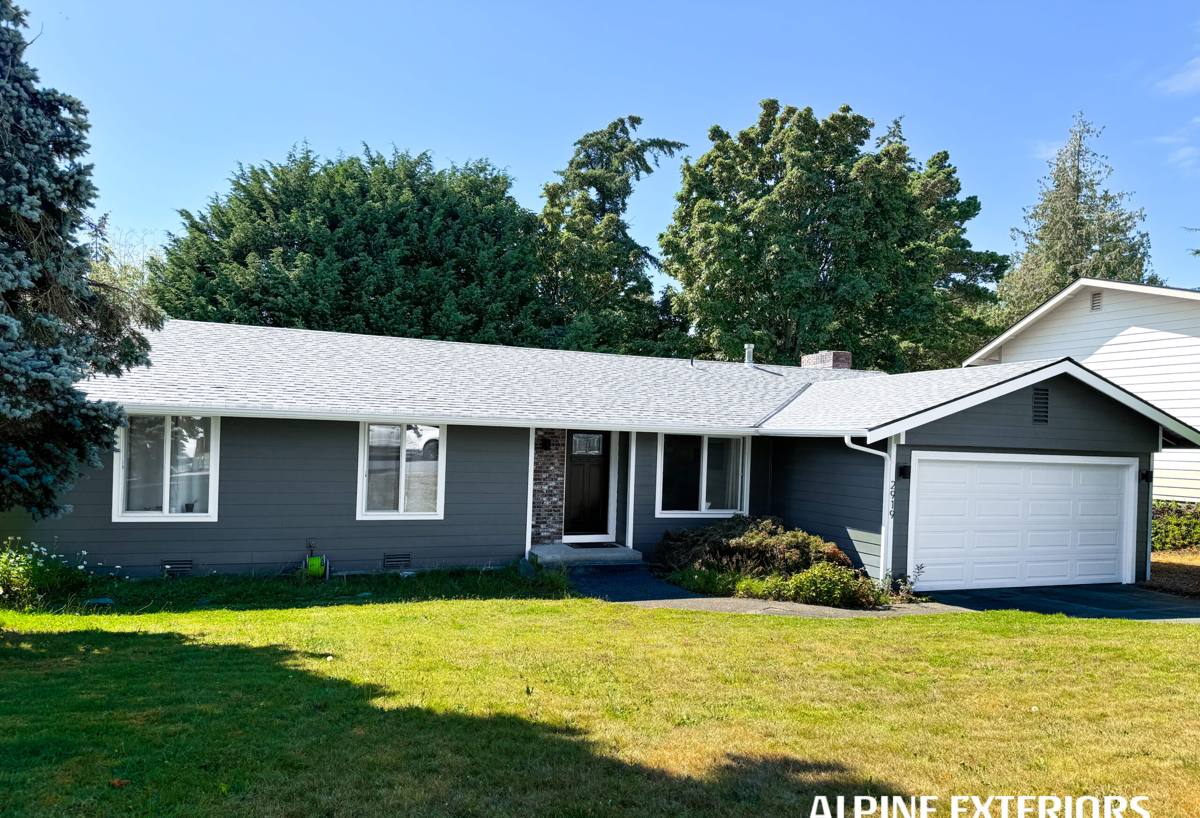
Why We Only Install James Hardie Siding in This Area
We're a Hardie-only siding contractor. We don't install vinyl, LP SmartSide, Cemplank, Allura, or bare cedar, and that's a deliberate standard, not a limitation of what we know how to do. Each of those alternatives has a real weak point that shows up specifically in a climate like Snohomish County's: vinyl can warp and fade under sun-and-rain cycling and never really stops water at the seams; engineered wood products are more sensitive to sustained moisture exposure at cut edges and butt joints; and bare or primed wood siding needs a maintenance schedule most homeowners can't realistically keep up with once the moss season sets in.
James Hardie fiber cement is engineered specifically for climates like this one. The HZ5 product line is formulated for regions with freeze-thaw cycling and sustained moisture exposure, which fits the Pacific Northwest better than the standard HZ10 line built for hot, dry climates. It's non-combustible, it doesn't absorb water the way wood-based products do, and the factory-applied ColorPlus finish is baked on under controlled conditions rather than field-painted, which matters a lot when your job site weather rarely gives you a clean, dry stretch to paint in.
What ColorPlus Finish Actually Buys You Here
A factory finish isn't just a convenience — in a marine climate it's a durability feature. Field-applied paint on siding has to bond to a surface that's often slightly damp, and it weathers unevenly once salt air and UV exposure start working on it. ColorPlus finish is cured in a factory environment, resists fading, and comes with a separate finish warranty from Hardie that's specifically about color retention, not just the board itself.
What a Correct James Hardie Installation Involves
Hardie siding is a good product, but it's only as good as the installation behind it. A rushed or spec-cutting install will fail early in this climate regardless of what's written on the product label. Here's what we treat as non-negotiable on every job.
Moisture Management Behind the Boards
The weather-resistive barrier and flashing details matter more than the siding itself in a climate this wet. Every window, door, and penetration needs proper head flashing and a drainage plane behind the siding so any water that does get past the surface has somewhere to go besides your sheathing. We follow Hardie's published installation instructions for house wrap integration, not a generic "any barrier will do" approach — because in a driving-rain climate, the barrier is doing real work, not just checking a code box.
Fastening, Clearance, and Joint Treatment
Nail pattern and fastener spacing affect how the boards handle expansion and contraction through our wet winters and drier summers. We also hold the manufacturer-specified clearance between siding and grade, decks, and roof lines — skipping that clearance is one of the most common causes of early moisture damage we see on homes that had siding installed by a crew unfamiliar with local conditions. Butt joints get properly flashed and caulked with a product rated for the exposure, not just whatever caulk was on the truck.
Trim, Caulk Joints, and Long-Term Sealing
Every caulk joint is a maintenance item, and in a salt-air, high-rain environment they age faster than they would inland. We use quality sealants at transitions and keep the number of caulk-dependent joints as low as the design allows, because fewer joints means fewer future failure points.
Comparing Siding Options for a Glenhaven Home
Homeowners researching siding options often ask us to lay out the real differences rather than marketing claims. Here's an honest comparison based on how these materials actually perform in Everett's climate over time.
| Material | Moisture Behavior | Salt Air / Coastal Exposure | Moss & Mildew Resistance | Maintenance Burden |
|---|---|---|---|---|
| James Hardie fiber cement | Does not absorb and swell like wood-based products | Non-combustible, holds finish well with proper fasteners | Hard surface sheds moisture, doesn't feed growth like wood | Low — periodic wash, no repainting on ColorPlus finish |
| Vinyl | Doesn't rot, but seams and laps let water track behind panels | Can become brittle and fade faster under UV/salt cycling | Growth builds in overlaps and low spots | Low upfront, but limited repair options when damaged |
| Engineered wood (LP-type) | Sensitive to sustained moisture at cut edges and joints | Requires diligent edge sealing near coastal exposure | Vulnerable if moisture gets past the coating | Moderate — edge sealing and coating checks needed |
| Cedar / primed wood | Absorbs moisture, prone to swelling and cupping | Salt air accelerates weathering of the wood surface | High — organic surface is a natural growth medium | High — regular repainting/staining and moss treatment |
Our Process, Start to Finish
1. On-Site Assessment
We walk the home and look at what's actually happening, not just what siding is currently installed. That includes checking for existing moisture damage, evaluating roofline and grade clearances, and noting anything — trim condition, window flashing, deck attachment points — that will affect the new install.
2. Detailed, Written Estimate
You get a clear scope of work: which Hardie products and profiles, what trim and flashing details are included, and a realistic cost range, before any work starts.
3. Prep and Moisture Barrier Work
Old siding removal reveals the sheathing and framing underneath, which we inspect before closing anything up. Any rot or damage gets addressed first — covering it up is how small problems become expensive ones. The weather-resistive barrier and flashing go in next, done to spec, not shortcuts.
4. Installation
Boards go up following Hardie's fastening and clearance specifications, with attention to butt joint placement and trim details that hold up to driving rain rather than just looking fine on installation day.
5. Final Walkthrough
We go over the finished job with you, point out any care items, and make sure everything matches the scope we agreed on.
Living With Hardie Siding Through the Moss Season
Even the right product benefits from basic upkeep in a climate that stays damp for months at a time. None of this is heavy maintenance — that's the point of choosing Hardie in the first place — but a little attention keeps the siding looking and performing the way it should for the long run.
- Rinse siding once or twice a year with a garden hose to clear salt residue, pollen, and organic buildup before it becomes established growth
- Keep gutters clear so overflow doesn't run down the siding face repeatedly during heavy rain
- Trim back landscaping and tree branches that keep sections of siding shaded and damp longer than the rest of the house
- Check caulk joints around windows, doors, and trim annually and have any cracked sealant redone before winter rains set in
- Address any moss or mildew spots early with a gentle wash rather than pressure-washing directly into seams
Why Local Experience in Glenhaven Actually Matters
A siding job in a dry inland climate and a siding job in coastal Snohomish County are not the same project, even with identical materials. Crews who regularly work neighborhoods like Glenhaven understand which details — flashing at grade transitions, clearance near decks and patios, joint placement relative to prevailing wind-driven rain — actually get tested by this climate versus which ones are just code minimums. That experience shows up in fewer callbacks and siding that still looks and performs correctly ten and twenty years out, not just on install day.
Permitting and inspection expectations in Snohomish County are also something a locally active crew stays current on, so there are no surprises mid-project.
What Affects the Cost of a Hardie Siding Job Here
Every home is different, but the main cost drivers for a Glenhaven project are consistent: the size and complexity of the home's exterior (number of corners, gables, and trim details), whether existing siding needs to be removed and what condition the sheathing is in underneath, the Hardie profile and finish chosen, and the amount of flashing and trim work required around windows, doors, and rooflines. We'll walk through all of this in a written estimate so there are no surprises once work begins.
If you're weighing your options for a Glenhaven home, we're happy to take a look and give you an honest, no-pressure estimate — including what we'd actually recommend for your specific house and exposure. Use the form below to get started.