 Everett
 Why Glenhaven Homes Face a Tougher Siding Climate
Glenhaven sits inside the same marine-influenced weather system that shapes all of Everett and Snohomish County, and that weather is not gentle on exterior cladding. Homes here deal with salt-tinged air moving in off Puget Sound, long stretches of driving rain pushed sideways by wind rather than falling straight down, and a wet season that stretches for months at a time. Add in mature tree cover and shaded lots that are common throughout many Everett neighborhoods, and you get an extended moss and algae season that keeps siding damp far longer than homes in drier parts of the state.
None of this is unusual for western Washington, but it does mean siding decisions that work fine in a dry climate can fail quietly here. Materials that tolerate occasional rain but not sustained dampness, or finishes that hold up to sun but not salt air, tend to show their weaknesses within a few years on a Glenhaven house rather than a few decades.
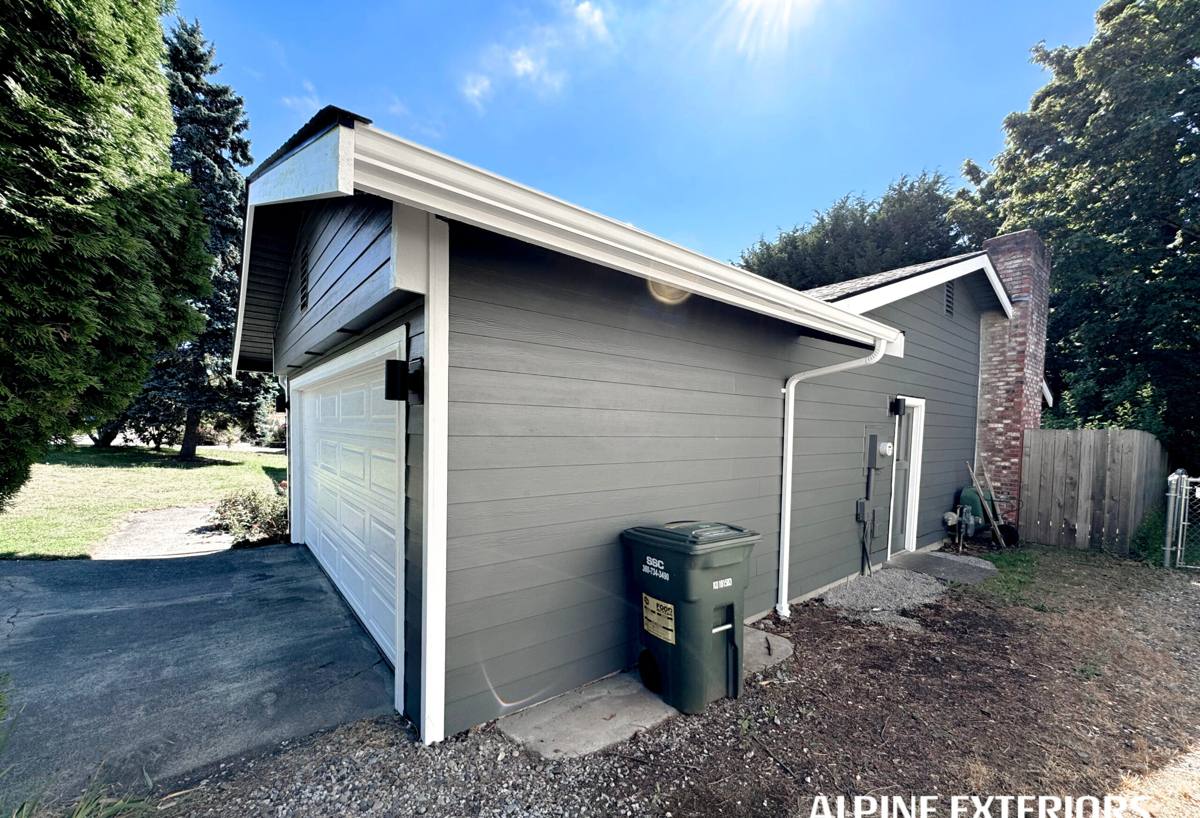
What Fiber Cement Siding Has to Get Right in This Climate
Moisture management behind the cladding
Driving rain doesn't just hit the face of a house — it gets forced sideways and upward at gaps, seams, and penetrations. Siding that isn't installed with proper clearances, flashing, and a functioning weather-resistive barrier behind it can trap moisture against the sheathing even if the siding material itself is water-resistant. This is where most siding failures actually start, and it's an installation issue as much as a product issue.
Salt air and finish durability
Airborne salt accelerates the breakdown of paint and cheaper factory finishes, leading to fading, chalking, and coating failure well before the underlying material wears out. A finish that's baked on and engineered to resist UV and salt exposure will hold its color and integrity far longer than a field-applied paint job.
Moss, algae, and organic growth
Shaded, damp siding is exactly where moss and algae take hold. Once organic growth gets established on a porous or textured surface, it holds moisture against the material and can accelerate deterioration underneath, even if the surface staining itself looks mostly cosmetic.
Why We Only Install James Hardie Fiber Cement
We made a deliberate decision to install James Hardie fiber cement siding exclusively — not vinyl, not LP SmartSide, not Cemplank or Allura, not primed spruce or cedar. That's not brand loyalty for its own sake; it's a standard we hold because of what we see in climates like this one. Fiber cement itself is non-combustible and dimensionally stable, meaning it doesn't expand and contract with moisture the way wood-based products do, and it doesn't soften or warp under sustained wet conditions the way some engineered wood siding can if a seal is ever compromised.
Hardie's ColorPlus factory finish is baked on in a controlled environment rather than applied on site, which gives it better adhesion and UV/salt resistance than field-applied paint. Hardie also engineers specific product lines — like their HZ5 line — for regions with more moisture exposure, which matters directly for a house sitting in Snohomish County's rain and salt air.
James Hardie Compared to Other Siding Materials
| Material | Moisture Tolerance | Salt Air / Finish Life | Moss & Algae Resistance | Typical Maintenance |
|---|---|---|---|---|
| James Hardie Fiber Cement | Excellent — non-combustible, dimensionally stable | Factory ColorPlus finish resists fading and chalking | Smooth/textured surfaces resist buildup better than porous wood | Occasional washing; repaint only if uncoated or damaged |
| Vinyl | Sheds water but can trap moisture behind it if installed loose | Can fade, warp, or become brittle over time | Grooves and laps can hold moss and algae | Low, but panels can crack or blow off in wind |
| Cedar / Primed Spruce | Absorbs moisture; prone to swelling, rot at joints | Repainting/staining needed every few years | Highly susceptible in shaded, damp conditions | High — regular sealing, painting, rot inspection |
| LP SmartSide (engineered wood) | Good if seals hold; vulnerable at cut edges and gaps | Field or factory finish, variable long-term performance | Moderate; depends on coating integrity | Moderate — edge sealing and caulk maintenance matters |
What a Correct Installation Involves
The siding material is only half the equation. On a Glenhaven home, correct installation is what actually determines whether the siding performs for decades or starts showing problems in year five. That includes:
- A continuous, properly lapped weather-resistive barrier behind the siding
- Correct fastening pattern and fastener type per Hardie's published specifications
- Proper clearance between siding and grade, roofing, decks, and other horizontal surfaces
- Flashing and kick-out flashing at every roof-wall intersection and window/door head
- Sealed and back-primed cut edges, since factory finish doesn't extend into field cuts
- Correctly caulked and gapped joints that allow for material movement without trapping water
Skipping any one of these doesn't necessarily cause an immediate problem — it causes a slow one, and slow moisture problems are exactly what this region's climate is good at finding and exploiting.
Our Process for Glenhaven Siding Projects
We start with a walk-around assessment of the existing siding and, where it's exposed, the sheathing and framing underneath. In an established neighborhood like Glenhaven, homes span a range of ages and prior renovation histories, so we don't assume the old siding was installed correctly — we check. From there, our process is straightforward:
- Remove old siding and inspect sheathing for hidden moisture damage or rot before covering anything back up
- Repair or replace any compromised sheathing rather than siding over it
- Install a new weather-resistive barrier and flash all penetrations, windows, and roof intersections
- Install James Hardie panels or lap siding to manufacturer specification, including fastening and clearances
- Caulk, touch up cut edges, and do a final walkthrough with the homeowner
Because we work this same climate on a regular basis, we're not guessing at how much clearance to leave near grade or how aggressive the flashing needs to be at a given roofline — it's built into how we bid and how we install.
Living With Fiber Cement Siding in a Moss-Prone Area
One advantage of switching to fiber cement in a neighborhood like Glenhaven is how little upkeep it demands compared to wood siding, but "low maintenance" doesn't mean "no maintenance." A simple annual routine keeps siding performing and looking right for the long haul:
- Rinse siding with a garden hose or soft wash (not a high-pressure wash, which can force water behind panels or damage the finish)
- Trim back tree limbs and shrubs so siding gets more light and airflow, especially on the north or shaded side of the house
- Check and re-caulk joints, trim, and penetrations every few years as sealants age
- Clear debris out of any spots where gutters or roof valleys direct water toward the wall
- Address any moss or algae staining early with a gentle cleaning rather than letting it build up over multiple seasons
Cost Factors for a Glenhaven Fiber Cement Project
| Factor | Why It Affects Cost |
|---|---|
| Existing siding removal | Tear-off and disposal of old material, more involved if hidden damage is found |
| Sheathing condition | Rot or moisture damage found underneath adds repair scope before new siding goes on |
| Home size and wall complexity | Dormers, gables, and multiple roof-wall intersections add flashing and cutting time |
| Siding profile and color | Lap width, panel vs. shingle-style profiles, and ColorPlus color selection vary in material cost |
| Trim and accessory work | Corner boards, window trim, and fascia work are often bundled into a full siding project |
We give homeowners a real number after seeing the house, not a phone estimate — the condition of what's underneath the current siding matters too much to guess at from a description.
Why Hiring a Crew That Already Works Glenhaven Matters
Siding crews that mostly work drier inland climates sometimes under-detail flashing and clearances because it simply doesn't get tested as hard there. In Everett, and specifically in a neighborhood with the tree cover and moisture exposure common to Glenhaven, those same shortcuts get found out — usually by the homeowner, a few years down the road, in the form of soft spots, staining, or moss creeping up from the bottom courses. A crew that installs Hardie siding regularly in this exact climate treats flashing, clearance, and moisture management as non-negotiable defaults, not extra steps.
Local, ongoing experience also means we're not learning on your house. We've seen how Snohomish County homes age under this climate, what fails first, and what holds up — and we build every installation around that.
If you're considering new siding for a Glenhaven home, we're happy to take a look and give you a straightforward, no-pressure estimate — just fill out the form below.