 Everett
 Board & Batten in a Puget Sound Microclimate
Board and batten has been a Pacific Northwest favorite for generations, and it's easy to see why in a neighborhood like Edmonds: the vertical lines suit the mix of craftsman bungalows, mid-century ramblers, and newer builds that sit close to the water. But the same style that looks right on an Edmonds street has to survive conditions that inland Snohomish County homes don't deal with in the same way. Proximity to Puget Sound means salt-laden air moving through siding joints and fasteners, driving rain pushed sideways by wind off the water, and a moss and algae season that can run most of the year under tree cover and marine humidity. A board and batten job that isn't built for that combination will show it in five years, not twenty.
This page is about that one job, done right, for that one area. We're not going to give you a generic rundown of board and batten siding — we're going to walk through what Edmonds homes specifically need from it, what a correct installation actually involves, and why the material choice matters as much as the workmanship.
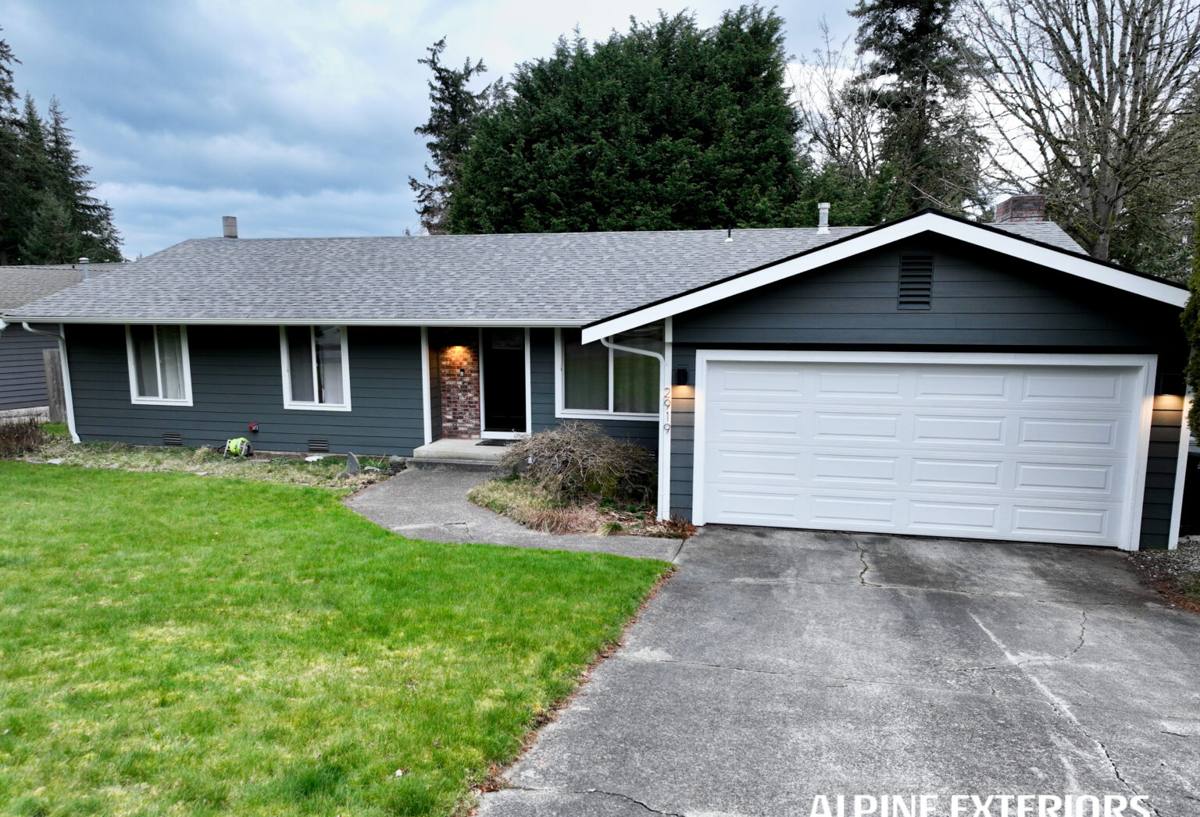
What Edmonds' Climate Actually Does to Vertical Siding
Salt air and fastener corrosion
Homes within a few miles of Puget Sound take in airborne salt that settles on exterior surfaces and works into any exposed metal — nail heads, flashing seams, trim fasteners. Over time, corrosion at those points opens tiny paths for moisture. On a board and batten wall, where you've got vertical boards, battens, and a lot of fastener penetrations by design, that adds up to a lot of vulnerable points if the wrong hardware or an inconsistent nailing pattern was used.
Driving rain and wind-loaded water
Edmonds gets weather systems moving in off the Sound that push rain horizontally into west- and south-facing walls. Vertical siding profiles like board and batten channel water differently than horizontal lap siding — water runs down the face of the boards and battens rather than being shed course by course, which means the seams, caulk joints, and butt joints have to be detailed correctly or that water finds a way behind the cladding.
Moss, algae, and prolonged dampness
Between the marine humidity and the tree canopy common in Edmonds' older residential streets, siding here stays damp longer than it would a few counties inland. Moss and algae growth isn't just cosmetic — sustained dampness against a wood-based or improperly sealed substrate accelerates rot and paint failure. Vertical battens create horizontal ledges (however small) at the top of each board where debris and moisture can sit if the detailing wasn't done with drainage in mind.
Why We Only Install James Hardie for This
Board and batten can be built out of several materials — primed wood, engineered wood, vinyl, or fiber cement. We've made the decision to install James Hardie fiber cement exclusively, and on a coastal-influenced job like an Edmonds board and batten project, the reasoning is direct:
- It doesn't rot. Fiber cement has no wood fiber for moisture to break down, which matters directly given how long Edmonds siding stays wet during fall and winter.
- It holds paint and factory finish longer. James Hardie's ColorPlus finish is baked on and warrantied against fading and peeling, which stands up better to UV and salt exposure than field-applied paint on primed wood.
- It's non-combustible. Not the primary driver in a marine climate, but it's part of why we standardized on one product system rather than juggling several.
- It's engineered for regional exposure. Hardie's HZ5 product line is formulated for the Pacific Northwest's wet, freeze-thaw-light but moisture-heavy conditions rather than a one-size-fits-all national spec.
We don't install LP SmartSide, vinyl, Cemplank, Allura, primed spruce, or cedar board and batten. Each of those has legitimate uses somewhere, but for the moisture load, salt exposure, and maintenance expectations of an Edmonds home, we've seen enough of the trade-offs — recoating cycles, seam sealing, substrate swelling — to standardize on one system we trust to be installed once and hold up.
Material Comparison for Edmonds Conditions
| Material | Behavior in Salt Air / Driving Rain | Maintenance Over Time |
|---|---|---|
| James Hardie fiber cement | Non-combustible, dimensionally stable, doesn't absorb moisture into the substrate | Periodic wash-down; factory finish warrantied, no repainting cycle in most cases |
| Primed wood / cedar | Absorbs moisture at end grain and joints; prone to swelling and checking near the water | Repainting/staining every few years; caulk joints need regular inspection |
| Vinyl board and batten | Can warp or become brittle with UV and temperature swings; seams can allow water intrusion | Low upkeep but limited repairability; color can't be refreshed |
| Engineered wood (LP-type) | Moisture-resistant treatment helps, but any breach at a cut edge or fastener can allow swelling | Manufacturer maintenance requirements must be followed closely to preserve warranty |
What a Correct Board & Batten Installation Involves
Drainage plane and rainscreen detailing
On a coastal-exposure job, we don't just nail battens over house wrap and call it done. A proper install includes a water-resistive barrier, correctly lapped and taped, with attention to how water is meant to travel down and out rather than pool at horizontal transitions. Many Edmonds homes benefit from a furring or rainscreen gap behind the siding so incidental moisture that does get past the cladding can drain and dry instead of sitting against the wall assembly.
Fastener selection and pattern
Given the salt air, we use corrosion-resistant fasteners and follow James Hardie's blind- or face-nailing specifications for the panel and batten combination being used, with attention to fastener spacing at panel edges where wind uplift and water infiltration risk is highest.
Flashing at every transition
Windows, doors, roof-to-wall intersections, and the base of the wall are where board and batten jobs succeed or fail. Step flashing, kick-out flashing at roof lines, and proper head flashing above openings all have to be integrated with the water-resistive barrier before the first board goes up — not caulked in afterward.
Joint and butt seam treatment
Where vertical boards meet horizontally (mid-wall butt joints) or terminate at trim, those seams get factory-primed cut edges sealed and treated according to Hardie's fastening and joint specifications, rather than relying on caulk alone to keep water out over the long run.
Batten spacing and reveal consistency
Beyond the water management, board and batten lives or dies visually on consistent batten spacing and reveal. We lay out spacing before the first board is hung so the pattern reads correctly across the whole elevation, including around windows and corners.
Common Problems We See on Existing Edmonds Siding
- Moss and algae buildup concentrated on north- and west-facing walls under tree cover
- Fastener corrosion staining bleeding down the face of boards near the water
- Caulk-dependent seams that have failed at butt joints and around trim
- Swelling or soft spots at the base of wood-based board and batten near grade
- Missing or undersized flashing at window heads, allowing water to track behind the siding
Our Process for a Board & Batten Project
| Step | What Happens |
|---|---|
| 1. On-site assessment | We inspect the existing wall assembly, check for hidden moisture or rot, and evaluate flashing at all penetrations |
| 2. Layout and product selection | We plan batten spacing and reveal, and confirm the James Hardie panel/trim combination and color for the home |
| 3. Tear-off and substrate check | Old siding comes off and we address any sheathing or framing damage found underneath before moving forward |
| 4. Water-resistive barrier and drainage plane | House wrap, taping, and rainscreen furring (where used) go in before any siding is installed |
| 5. Flashing integration | Windows, doors, and roof transitions are flashed and tied into the barrier system |
| 6. Installation | Panels and battens are hung to Hardie's fastening spec, with consistent spacing and sealed joints |
| 7. Final walkthrough | We review the finished elevations with the homeowner and confirm trim, caulking, and touch-up are complete |
What Affects Cost on an Edmonds Board & Batten Job
Every home is different, but the main cost drivers on a board and batten project in this area tend to be the same handful of factors:
| Factor | Why It Matters |
|---|---|
| Substrate condition | Rot or water damage found during tear-off adds repair scope before new siding can go on |
| Wall complexity | Dormers, multiple gables, and lots of window trim add labor for cutting and flashing |
| Rainscreen inclusion | Adding a drainage gap improves long-term performance but adds material and labor |
| Batten spacing/pattern | Tighter spacing means more boards, more fasteners, and more layout time |
| Access and site conditions | Steep lots, tight setbacks, and multi-story walls near the water affect scaffolding and staging |
We give straightforward, itemized estimates rather than vague ranges once we've actually looked at the wall.
Maintenance Once It's Installed
Part of why we recommend James Hardie for this climate is how little ongoing maintenance it asks for compared to wood alternatives — but "low maintenance" isn't "no maintenance," especially this close to the Sound:
- Rinse siding annually to remove salt residue and airborne debris, especially on water-facing elevations
- Trim back tree limbs and shrubs to reduce shade and moisture retention against the wall
- Inspect caulk joints at trim and penetrations every year or two and touch up as needed
- Watch for moss starting at north-facing corners and address it early with a gentle wash
- Keep gutters and downspouts clear so roof runoff isn't dumping extra water onto the siding
Why Hiring a Crew That Already Works in Edmonds Matters
Board and batten installation isn't unique to Edmonds, but the conditions it has to perform under here are specific: the salt exposure, the rain angle off the water, the tree cover on older lots, and the moss season that runs longer than it does further inland. A crew that installs siding across a wide range of Snohomish County conditions — not just one product in one town — brings that pattern recognition to the flashing details, fastener choices, and drainage planning that actually determine whether the job holds up. That's the difference between a board and batten wall that still looks sharp in fifteen years and one that's showing staining and soft spots in five.
If you're considering board and batten siding for your Edmonds home, we're happy to take a look, walk you through what your specific walls need, and put together a straightforward estimate — no pressure, no obligation. Just fill out the form below to get started.