 Everett
 Windows in Eastmont Face a Different Set of Problems
Eastmont sits close enough to Puget Sound and the Snohomish River valley that homes here take on a specific kind of weather punishment: salt-laden air moving in off the water, long stretches of driving rain in the fall and winter, and a moss season that seems to start earlier and last longer every year. None of that is dramatic on its own. What it does is slow and cumulative — it works on seals, frames, and finishes in ways that don't show up as an obvious failure until a window has already been quietly losing the fight for years.
If you've owned a home in this part of Everett for more than a decade, you've probably noticed some combination of: windows that feel drafty even when they're "closed," condensation building up between panes, wood or vinyl frames that have gone soft, chalky, or discolored, and locks or cranks that don't move the way they used to. Those are symptoms of the local climate doing its work on materials that were never sealed or installed with this environment in mind.
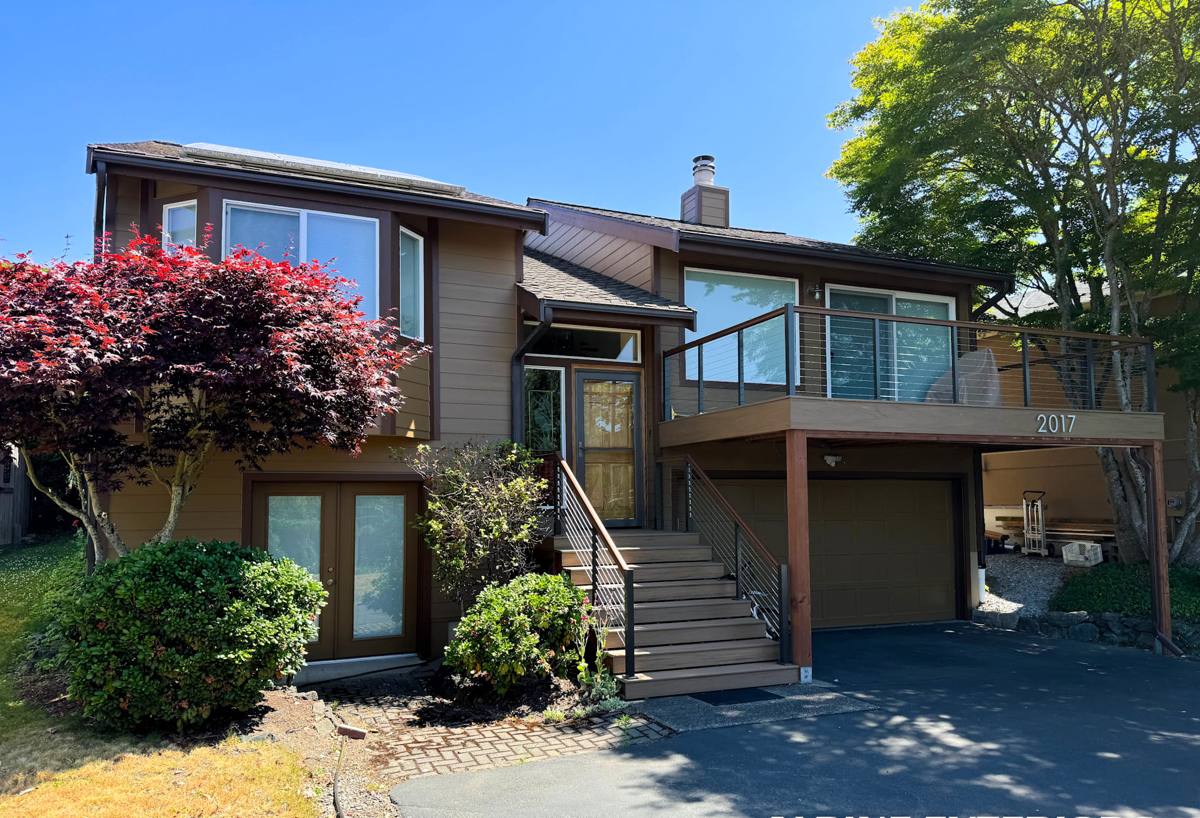
What Salt Air, Rain, and Moss Actually Do to a Window
Salt Air
Airborne salt is corrosive to metal hardware — hinges, locks, balance mechanisms, and screen frames — and it accelerates the breakdown of certain sealants and finishes over time. It's a slower process than direct water intrusion, but it's constant, and it's part of why hardware on older windows in this area often fails before the glass or frame does.
Driving Rain
Snohomish County doesn't just get rain, it gets wind-driven rain that hits windows at an angle instead of falling straight down. That matters because a window that's watertight against vertical rain can still let water in around the flashing, sill, or trim when it's coming in sideways. Poor flashing detail is one of the most common causes of hidden water damage we find behind older window installations — the glass and sash look fine, but the framing around them has been wet for years.
Moss and Sustained Moisture
A long moss season means more months of the year where wood trim, sills, and nearby siding stay damp instead of drying out between rain events. Moss and organic growth hold moisture against the surface, and where that surface is old wood window trim or a compromised sill, it accelerates rot from the outside in. This is less about the glass itself and more about everything around it — the parts of a window job that are easy to rush and hard to inspect after the fact.
Signs an Eastmont Home Is Overdue for Replacement
- Visible fogging or moisture trapped between panes of double-pane glass — the seal has failed and can't be fixed, only replaced
- Frames that feel soft, spongy, or show discoloration, especially at the bottom corners and sill
- Windows that are hard to open, close, or lock, or that no longer sit flush in the frame
- Noticeable drafts near the frame even with the window fully latched
- Paint or finish that's bubbling, peeling, or chalking faster than it should
- Rising energy bills without a clear cause elsewhere in the home
- Visible gaps between the window frame and the siding or trim around it
Any one of these on its own might not mean much. Two or three together, especially on the sides of the house that catch the most wind and rain, usually mean the windows are past the point where caulking and minor repair will hold.
What a Correct Window Replacement Involves
Window replacement done right is mostly about what happens before and around the window unit, not the window itself. Any reasonable window on the market today will perform fine if it's installed correctly. Most of the problems we get called out to fix in older installations trace back to shortcuts taken during the install, not a bad product.
The Parts That Actually Matter
- Removing the old unit without damaging the rough opening — and actually inspecting what's behind it. This is where hidden rot from years of moss and trapped moisture gets found, or missed.
- Repairing any damaged framing or sheathing before the new window goes in. Installing a new window into a compromised opening just resets the clock on the same failure.
- Correct flashing, in the right sequence, so water that does get behind the siding is directed out and down, not trapped against the frame. This is the single biggest factor in whether a window stays dry through driving rain.
- Proper air-sealing and insulation around the frame — not just caulk on the outside, but sealing the gap between the window unit and the rough opening so there's no path for drafts or moisture.
- Correct shimming and leveling so the window operates smoothly and the seals compress evenly for the life of the unit.
- Exterior trim and finish work that sheds water and holds up to salt air without becoming a maintenance headache every year or two.
Choosing Materials for This Climate
There's no single "best" window material — there are trade-offs, and the right call depends on the home, the budget, and how much upkeep an owner wants to take on. Here's how the common options stack up for a home dealing with salt air, wind-driven rain, and a long wet season:
| Frame Material | How It Handles This Climate | Maintenance |
|---|---|---|
| Vinyl | Doesn't rot or corrode from salt air; performs well against moisture when installed with correct flashing | Low — occasional cleaning, no painting |
| Fiberglass | Very stable in temperature swings and moisture; strong resistance to the elements | Low — durable finish, minimal upkeep |
| Wood (clad exterior) | Good insulator and classic look, but exposed wood is vulnerable where moss and sustained dampness are common | Higher — exterior cladding helps, but trim and sills still need attention |
| Aluminum | Prone to corrosion in salt air over time unless it's a marine-grade or well-coated product | Moderate to high — watch for pitting and hardware wear |
We'll talk through what fits your home specifically rather than pushing one material as the universal answer — that's a decision that should account for your home's exposure, your budget, and how it's been holding up so far.
Why We Don't Cut Corners on Flashing and Sealing
It would be faster, and cheaper on labor, to pull an old window, drop a new one in the same opening, caulk the exterior, and call it done. That approach can look identical to a correct install for the first year or two. The difference shows up three, five, or ten years later, when water that's been getting behind the trim finally rots out the sill or sheathing — and by then it's a much bigger repair than a window job.
Our standard is to treat every replacement as a chance to inspect and correct what's around the window, not just swap the unit. In a climate that includes driving rain and a long moss season, that's not optional extra work — it's the difference between a window that lasts and one that quietly fails from the inside out.
Our Process for Eastmont Homes
- On-site assessment — we look at the windows you're concerned about and check for signs of hidden moisture damage in the surrounding framing and trim
- Honest recommendation — replacement where it's needed, repair where that's genuinely the better call, and a clear explanation either way
- Material and product discussion — matched to your home's exposure and your priorities, not a one-size-fits-all pitch
- Removal and inspection — old units come out carefully, and we check the opening before anything new goes in
- Correct installation — flashing, sealing, shimming, and finish work done in the right order, not shortcuts
- Final walkthrough — operation checked, sightlines checked, and any questions answered before we consider the job done
Why Local Experience in Eastmont Matters
A crew that works regularly in Everett and the surrounding Snohomish County neighborhoods has seen how homes in this specific microclimate age — which sides of a house take the worst of the wind-driven rain, where moss tends to build up fastest, and which older installation habits from decades past tend to fail first. That's not something you get from a general product catalog or a crew that mostly works somewhere drier or further inland. It shapes how we flash a window, where we pay extra attention during removal, and what we flag as a concern even if it wasn't the reason you called.
If your windows in Eastmont are drafty, fogged, hard to operate, or just past their prime, we're happy to take a look and give you a straight assessment — no pressure, no obligation. Use the form below to request a free estimate, and we'll walk through what your home actually needs.