 Everett
 Asphalt Shingle Roofing Built for Delta's Weather
Delta sits close enough to the water and the Snohomish County lowlands that its roofs take a different kind of beating than homes further inland. Salt-tinged air off the Sound, long stretches of driving rain through fall and winter, and a moss season that can run eight months out of the year all work against a roof that isn't installed with this specific climate in mind. Asphalt shingle roofing is still the right choice for the vast majority of homes here — it's cost-effective, well understood, and easy to repair — but the installation details matter more in Delta than they would in a drier, calmer part of the state.
We work on roofs throughout Everett and Snohomish County, and Delta comes with its own pattern of problems: shingles that lose granules faster near the water, moss colonies that take hold in shaded north-facing slopes, and edge flashing that fails first because it's the part exposed to wind-driven rain longest. A roof designed and installed for this neighborhood accounts for all three from day one.
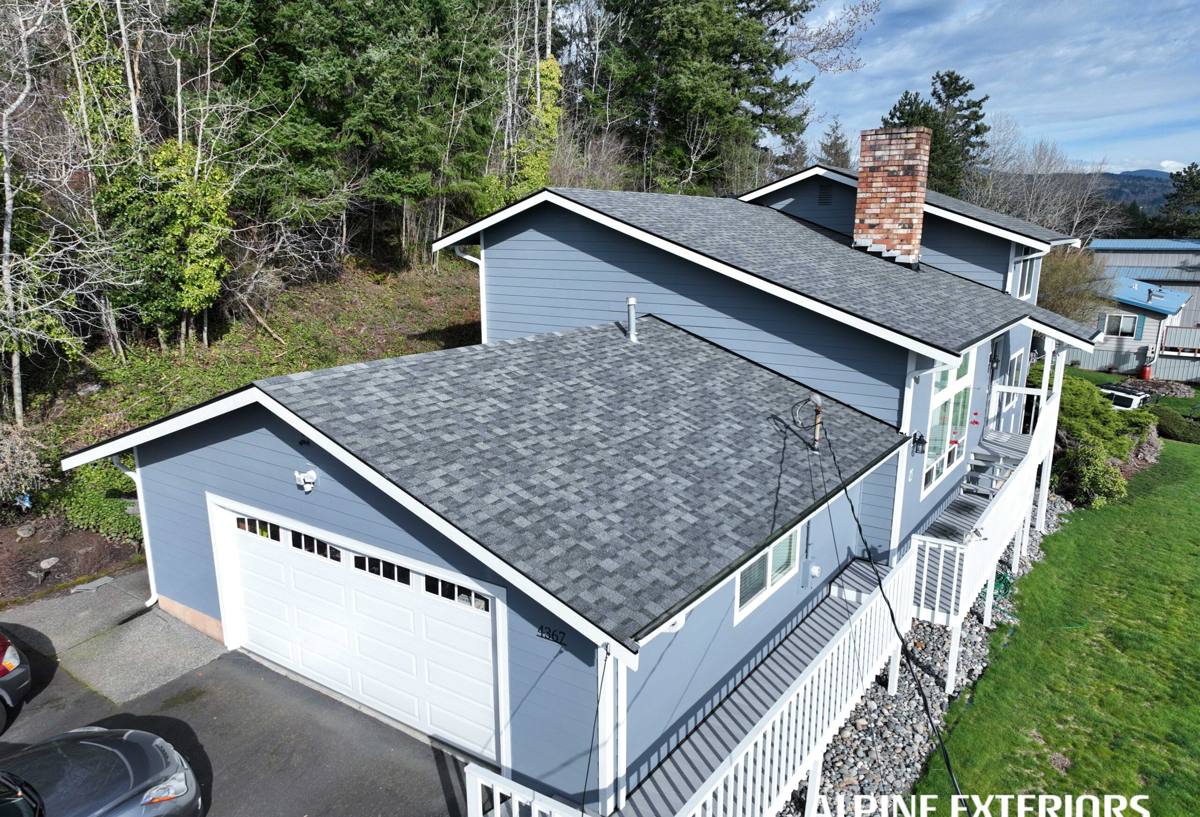
What Delta's Climate Does to a Roof
Salt Air and Shingle Wear
Homes closer to the water deal with airborne salt that settles on roofing materials and accelerates the breakdown of asphalt binders and metal fasteners over time. It's a slow process, not a dramatic one — but it means corrosion-resistant fasteners and flashing aren't optional upgrades here, they're the baseline.
Driving Rain and Wind-Driven Water
Everett gets a lot of rain that doesn't fall straight down — storms off the water push rain sideways into roof edges, valleys, and anywhere two roof planes meet. Standard nailing patterns and underlayment that would be fine in a calmer climate can let water sneak past the shingle line during a real windstorm. Valleys, eaves, and rake edges need extra attention, not just a standard shingle layout.
Moss and Moisture
Shade, moisture, and mild temperatures are exactly what moss wants, and Delta's tree cover combined with our wet stretches gives it plenty of opportunity. Moss doesn't just look bad — it holds moisture against the shingle surface, lifts shingle edges as it grows, and works its way under tabs where it can eventually create a path for water. A roof that isn't set up to shed moisture and resist moss growth from the start will need moss treatment far more often than it should.
What a Correct Asphalt Shingle Job Looks Like Here
A roof that's going to hold up in Delta's conditions needs more than "shingles nailed to the deck." The parts that matter most are usually the parts a homeowner never sees once the job is done:
- Ice-and-water shield at eaves and valleys — a self-adhering membrane under the shingles in the areas most exposed to wind-driven rain and ice damming
- Synthetic underlayment across the full roof — a second line of defense that outperforms old-style felt in wet climates and doesn't degrade as fast in the damp
- Corrosion-resistant flashing and fasteners — especially around chimneys, skylights, and wall intersections, where salt-air corrosion shows up first
- Proper nailing pattern and shingle exposure — matched to the manufacturer's high-wind specification, not just the minimum code requirement
- Balanced attic ventilation — intake at the eaves and exhaust at the ridge, so moisture from inside the house doesn't condense against the roof deck and shorten the shingles' life from underneath
- Moss-resistant shingle options or zinc/copper strips on north-facing and heavily shaded slopes, where regrowth is fastest
Skip any one of these and the roof will likely still look fine for a few years. The problems that show up from cutting corners on flashing, underlayment, or ventilation tend to surface five, ten, or fifteen years down the road — right when they're most expensive to fix.
Choosing the Right Shingle for a Delta Roof
Not every asphalt shingle product performs the same way in wet, mossy, salt-air conditions. We steer homeowners toward products with a track record in Western Washington rather than whatever has the lowest sticker price, because the cheapest shingle is rarely the cheapest roof once you account for how often it needs attention.
| Shingle Type | Typical Lifespan Here | Best Fit For |
|---|---|---|
| 3-tab asphalt | 15–20 years | Budget-focused re-roofs, simple roof lines |
| Architectural (laminated) asphalt | 25–30 years | Most Delta homes — better wind rating, thicker profile sheds moss growth more easily |
| Algae/moss-resistant architectural | 25–30 years | Shaded lots, north-facing roof planes, homes with heavy tree cover |
| Premium/designer architectural | 30+ years | Steeper roofs, homeowners prioritizing curb appeal and longer intervals between re-roofs |
For most Delta homes, we recommend architectural shingles with algae/moss-resistant granules as the practical middle ground — the upgrade cost over standard architectural shingles is modest, and the reduction in moss regrowth and streaking pays for itself in fewer maintenance calls over the life of the roof.
Our Process for a Delta Re-Roof
1. Roof Inspection and Honest Assessment
We start by getting on the roof, not just looking at it from the ground. We check the deck for soft spots, evaluate existing flashing and ventilation, and look for the moss and moisture patterns specific to that property's shading and slope orientation. If a full replacement isn't needed yet, we'll say so.
2. Straightforward Quote
The quote breaks out material choice, tear-off, deck repair (if needed), flashing, ventilation work, and cleanup — so there's no guessing what you're paying for and no surprise change orders mid-project.
3. Tear-Off and Deck Inspection
Old roofing comes off down to the deck. This is the point where hidden problems — soft or rotted sheathing, undersized ventilation, old flashing that was never properly integrated — actually get found and fixed, rather than covered back up.
4. Underlayment, Flashing, and Ventilation First
Before a single shingle goes down, we get the water-management layer right: ice-and-water shield at the vulnerable areas, synthetic underlayment across the field, corrosion-resistant flashing at every penetration and wall intersection, and balanced intake/exhaust ventilation.
5. Shingle Installation to Manufacturer Spec
Nailing pattern, exposure, and starter strip installation follow the manufacturer's high-wind specification — which also keeps the manufacturer's warranty intact, something a lot of shortcut installations quietly void.
6. Final Walkthrough and Cleanup
We walk the finished roof with you, cover care and moss-prevention basics specific to your roof's exposure, and make sure the property is cleaned up — magnetic sweep for nails included.
Why a Crew That Already Works Delta Matters
Roofing crews that mostly work drier, inland areas can install a technically correct roof and still miss the details that matter specifically here — how much extra attention a shaded north slope needs, which flashing details actually hold up against wind-driven rain off the water, or how aggressively to plan for moss given a particular lot's tree cover. A crew that regularly works Snohomish County's wetter, coastal-influenced neighborhoods brings that judgment to the job without having to relearn it on your roof.
There's also a practical side: local crews know the permitting process with the City of Everett and Snohomish County, and they're around for warranty service, moss treatment, and gutter or flashing checkups years after the install — not just for the sale.
Maintaining Your Asphalt Shingle Roof in Delta's Climate
Even a well-installed roof needs some upkeep in this climate. A short annual routine goes a long way toward hitting the full lifespan of the shingles:
- Clear debris and needles from valleys and gutters each fall, before the heavy rain sets in
- Have moss growth treated or removed before it spreads across a full slope, not after
- Check attic ventilation isn't blocked by insulation or storage — poor airflow shortens shingle life from the underside
- Have flashing around chimneys, skylights, and vent pipes inspected every few years, since that's where leaks most often start
- After any major windstorm, do a visual check (or have us check) for lifted or missing shingles rather than waiting for a leak to show up inside
What Affects the Cost of a Delta Re-Roof
Every roof is different, but the same handful of factors drive most of the price difference between one Delta home and the next:
| Factor | Why It Matters |
|---|---|
| Roof size and number of planes | More square footage and more valleys/hips mean more material and labor |
| Existing deck condition | Rotted or soft sheathing found at tear-off adds repair cost but is essential to address |
| Shingle grade selected | Standard architectural vs. moss-resistant vs. premium designer lines carry different material costs |
| Roof pitch and access | Steeper roofs and difficult access take longer and require more safety setup |
| Ventilation and flashing upgrades | Bringing older intake/exhaust or flashing up to current standards adds scope but prevents future problems |
| Layers of existing roofing | Multiple old layers mean more tear-off labor and disposal |
We'd rather walk your roof and give you real numbers than throw out a broad estimate that doesn't hold up once we're actually up there. A written quote after inspection tells you exactly what you're paying for and why.
Get a Free Estimate for Your Delta Roof
If your roof is showing granule loss, moss buildup, or you're just planning ahead before Everett's next wet season, we're happy to take a look and give you a straight assessment — no pressure, no upsell. Fill out the form below to schedule a free estimate for your Delta home.