 Everett
 Why Snohomish Decks Wear Out Faster Than the Brochure Says
Decks in Snohomish take a different kind of beating than decks in drier climates. You've got moisture in the air most months of the year, wind-driven rain that finds its way under railings and through fastener holes, and a moss season that can stretch from fall clear into spring. None of that shows up as one dramatic failure. It shows up as a slow, quiet breakdown of wood fiber, fasteners, and flashing that a homeowner usually doesn't notice until a board flexes underfoot or a railing post wiggles more than it should.
That's the case for repair over "just restain it and see." A deck that looks rough on the surface might be structurally fine. A deck that looks decent from the yard might have a soft ledger board or corroded joist hangers doing far less work than they were built for. The only way to know is to actually get under the decking and look — which is the first thing we do on every repair call in this area.
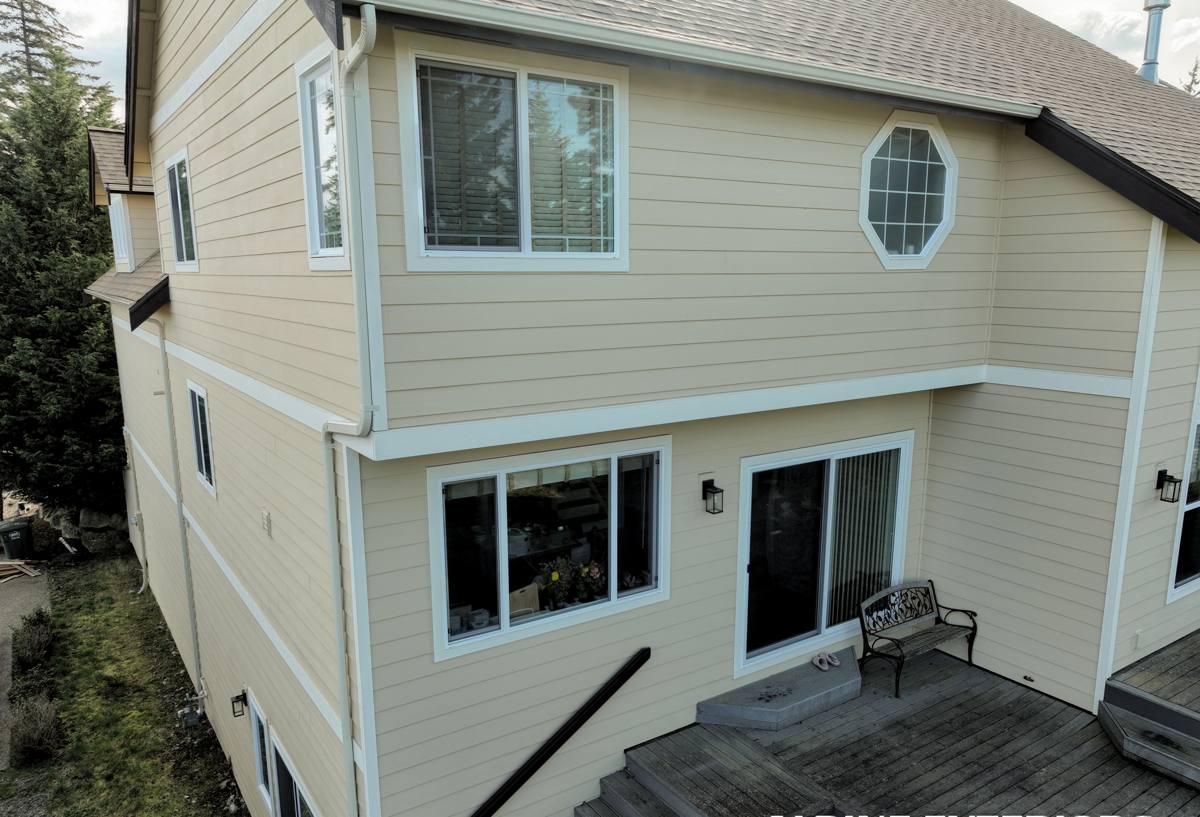
What Salt Air, Rain, and Moss Actually Do to a Deck
Moisture Cycling
Snohomish County's climate keeps wood decking in a near-constant cycle of wet and dry. Boards swell when they take on water and shrink as they dry out, and that back-and-forth loosens fasteners, opens up hairline cracks, and eventually causes cupping or splitting — especially on horizontal surfaces like stair treads and the tops of railing caps that never fully dry between rain events.
Corrosion at the Metal Connections
A deck is only as strong as its hardware — joist hangers, ledger bolts, post bases, and structural screws. In areas with salt-laden air and long damp stretches, standard or under-spec'd fasteners corrode faster than the wood around them fails. We see this most often at ledger connections and stair stringers, where a corroded bolt or hanger can quietly lose most of its holding strength while the wood nearby still looks fine.
Moss and Organic Growth
Moss doesn't just look bad — it holds moisture directly against the decking surface, which speeds up rot in the boards underneath and makes stairs and low-traffic areas genuinely slippery. Left long enough, moss and the trapped moisture behind it can work into fastener holes and seams, giving water a path straight into the framing below.
Signs Your Deck Needs Repair, Not Just a Facelift
Homeowners often call us about surface issues — graying wood, peeling stain, a rough patch of decking — and that's a fine reason to call. But we always check for the structural signs first, because those are the ones that actually matter for safety and long-term cost.
- Boards that feel spongy, springy, or noticeably softer underfoot than the rest of the deck
- Railings or posts that move more than a small amount when pushed
- Visible gaps, rust streaks, or staining around joist hangers and structural screws
- A ledger board area (where the deck attaches to the house) that looks discolored or damp
- Stair stringers that flex or creak under normal walking weight
- Persistent moss or algae in the same spots every year, even after cleaning
- Fasteners backing out or popping up above the board surface
Any one of these on its own might be a minor fix. Several together usually mean the underlying structure needs a closer look before we talk about surface repairs at all.
What a Correct Deck Repair Actually Involves
A repair that only addresses what's visible from the top tends to come back within a season or two, especially in a climate that never really lets a deck dry out completely. Our approach starts below the decking, not above it.
Structure First
We inspect the ledger connection, joists, beams, and post footings before touching a single deck board. If the framing is sound, we repair or replace decking and railings with confidence. If it isn't, we address that first — there's no version of "just replace the boards" that fixes a compromised ledger or a rotted joist.
Fastener and Hardware Upgrades
When we open up a deck built or repaired with standard hardware, we typically upgrade to corrosion-resistant fasteners and connectors suited to the Pacific Northwest's damp conditions. It costs a little more upfront and saves the next contractor from finding the same rust in five years.
Flashing and Water Management
A huge share of the deck failures we find trace back to missing or failed flashing at the ledger board — the single most common point for water to get behind a deck and into the house's rim joist. Correcting or adding proper flashing here is often the most important thing we do on a repair, even though it's the least visible.
Matching Materials, Not Just Patching
Where boards need replacing, we match species, dimension, and fastening pattern so the repair doesn't stand out or perform differently than the surrounding deck under weather stress.
Wood vs. Composite: Repair Considerations for Snohomish Conditions
Both wood and composite decking show up throughout Snohomish, and each has different repair needs given the local climate. We don't push one material as universally "better" — the right call depends on the deck's age, budget, and how it's used.
| Factor | Wood Decking | Composite Decking |
|---|---|---|
| Moisture response | Swells/shrinks with wet-dry cycles; needs sealing to slow this | Dimensionally stable, but can trap moisture underneath if not ventilated |
| Moss/algae resistance | Moderate — bare or worn finish absorbs and holds moisture | Better surface resistance, though grooved boards can collect debris that holds moss |
| Repair approach | Individual board replacement is straightforward and affordable | Matching discontinued colors/profiles can be difficult on older installs |
| Fastener sensitivity | Standard structural fasteners fine below deck; hidden fastener systems common on top | Requires manufacturer-specified fasteners and gapping to avoid warranty issues |
| Long-term maintenance | Needs periodic cleaning and refinishing to keep water out | Lower surface maintenance, but substructure still needs the same inspection |
One point that applies to both: the framing underneath is almost always wood, regardless of what the decking surface is made of. A composite deck with a neglected wood substructure has the exact same failure risks as an all-wood deck — the surface material doesn't change what's happening at the ledger and joists.
Our Deck Repair Process
- On-site inspection — we walk the deck, check for surface symptoms, and get underneath where access allows to check framing, hardware, and flashing.
- Written scope — we tell you plainly what's structural, what's cosmetic, and what we'd genuinely leave alone if it's not causing a problem.
- Repair work — structural corrections first (framing, hardware, flashing), then decking, railings, and stairs.
- Finish and protect — sealing or finishing exposed wood appropriately for our climate, so the repair holds up rather than just looking fresh for one season.
- Walkthrough — we go over what we did and what to watch for going forward, including moss-prone spots specific to your deck's exposure and shade pattern.
What Affects the Cost of a Deck Repair
| Cost Factor | Why It Matters |
|---|---|
| Extent of hidden damage | A repair that turns out to include ledger or joist work costs more than surface board replacement, but skipping it isn't a safe option |
| Deck size and layout | Multi-level decks, built-in benches, and stairs all add labor and material complexity |
| Material match | Matching existing wood species or a discontinued composite profile can add cost and lead time |
| Access | Decks over slopes, close to property lines, or requiring temporary shoring cost more to work safely |
| Hardware condition | Full hardware upgrades add cost but reduce the chance of repeat failures in wet conditions |
We give straightforward, itemized estimates rather than a single vague number, so you can see exactly what's driving the cost and where you have choices.
Keeping a Repaired Deck in Good Shape
A well-done repair still needs some ongoing attention in this climate. A little seasonal care goes a long way toward making sure the work lasts.
- Sweep leaves and debris off the deck regularly, especially in fall — trapped organic matter holds moisture and feeds moss
- Clean moss and algae off boards and stairs before they build up a slick layer
- Check that gutters and downspouts near the deck aren't dumping extra water onto it
- Look at the ledger board area once a year for any new staining or softness
- Reseal or refinish wood decking on the schedule appropriate to its finish, not just "when it looks bad"
- Keep planters and rugs from sitting in one spot for long stretches, since they trap moisture underneath
Why It Matters That We Already Work in Snohomish
A repair crew that mostly works drier climates will often treat a Snohomish deck like any other deck — patch what's visibly damaged, apply a finish, and move on. A crew that works this area regularly knows to expect corrosion at hardware before it's visible, to check ledger flashing as a matter of course, and to recognize which moss patterns point to a drainage issue versus just shade. That local pattern-recognition is what separates a repair that lasts from one that's back on the schedule in two years.
We're an Everett-based crew that works throughout Snohomish County, and we bring that same standard to every deck repair — full structural check, honest scope, and work built for the conditions this area actually produces, not the conditions a spec sheet assumes.
If you've got a deck in Snohomish that's showing any of the signs above — or you just want an honest opinion on whether it needs repair at all — we're glad to take a look. Reach out using the form below for a free, no-pressure estimate.