 Everett
 Deck Repair Built for Marysville's Weather
Marysville sits close enough to Puget Sound and the Snohomish River delta that decks here take a beating most homeowners don't fully see until a board gives way underfoot. Salt-tinged air off the water, long stretches of driving rain from fall through spring, and a moss season that can run half the year all work on wood and hardware in ways that inland decks rarely experience. A deck that looks fine from the yard can be hiding soft joists, rusted fasteners, or a ledger board connection that's been slowly failing for years.
We repair decks throughout Marysville and the surrounding Snohomish County area, and the pattern is consistent: the damage almost always starts at the points where water collects and can't get away fast enough — ledger boards, joist tops, post bases, and anywhere moss has been allowed to hold moisture against the wood. Fixing a deck right means addressing those points, not just replacing the boards that look bad.
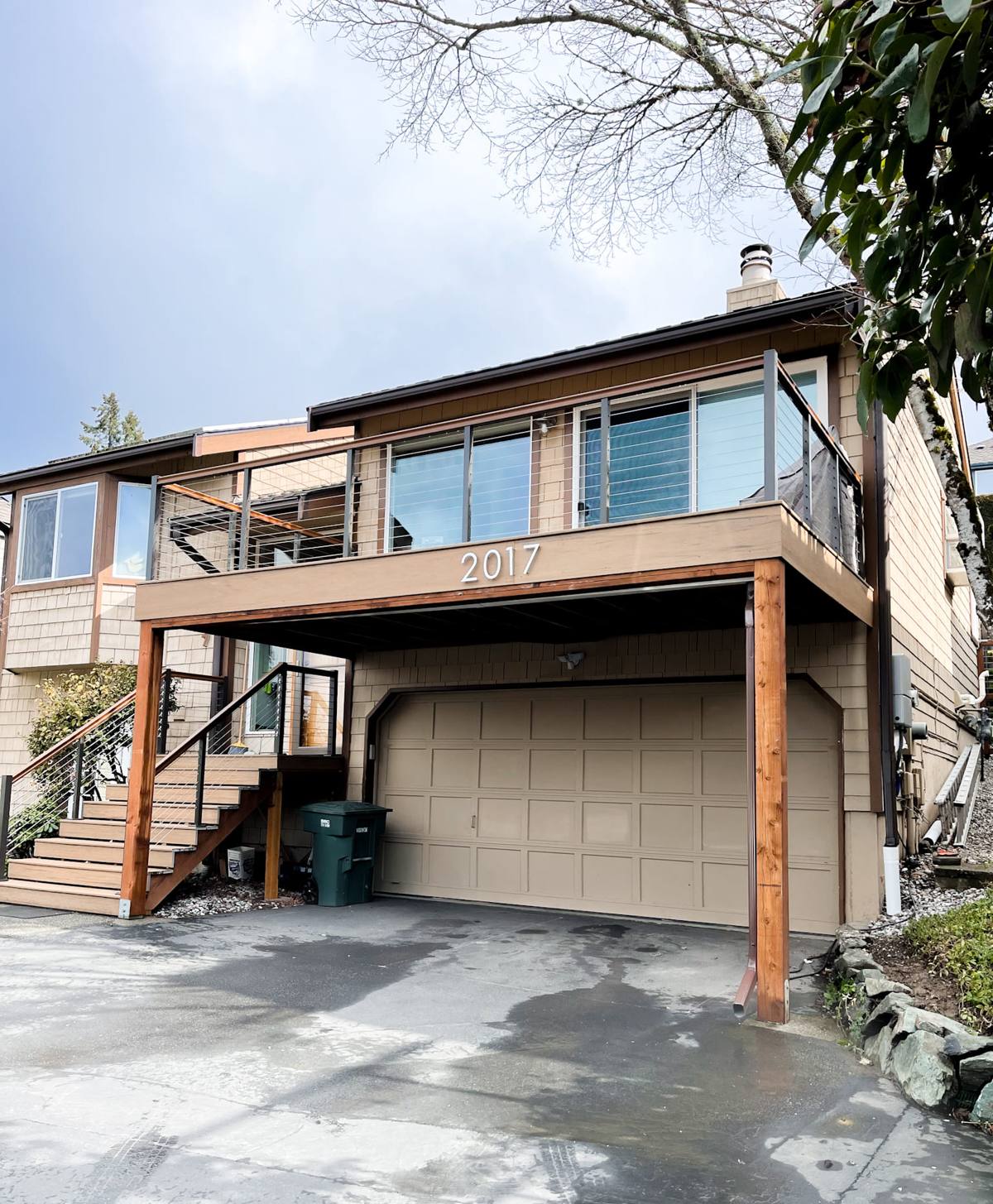
Why Marysville Decks Wear Differently
Salt Air and Metal Fatigue
Homes closer to the water deal with a fine salt content in the air that accelerates corrosion on anything metal — nails, screws, joist hangers, and railing hardware. Corroded fasteners lose their grip strength long before the wood around them looks bad, which is why a deck can feel "loose" or springy even when the boards themselves seem solid.
Driving Rain and Grain-End Absorption
Our rain doesn't just fall straight down — wind-driven rain gets pushed sideways into board ends, stair stringers, and the gap where decking meets the house. Wood absorbs water fastest through its end grain, so board ends and cut edges are almost always the first place rot shows up, well before the field of the deck.
Moss and Prolonged Moisture Contact
Snohomish County's moss season can stretch from late fall into spring. Moss doesn't just look bad — it holds a layer of moisture directly against the decking surface for weeks at a time, which is exactly the condition that breaks down wood fibers and finish coatings. Shaded decks under trees or on the north side of a house are especially prone to this.
Common Problems We Find on Marysville Decks
- Soft or spongy decking boards, especially near the house or at board ends
- Rust staining around screws and nail heads
- A ledger board (where the deck attaches to the house) that's separating slightly or shows dark staining underneath
- Joists that feel bouncy or have visible sag between supports
- Railing posts that wiggle at the base
- Green or black buildup on boards, stairs, or under railings
- Stair stringers with soft or splitting wood at the ground contact point
- Gaps opening up between deck boards and fascia trim
Structural Repair vs. Cosmetic Refresh
Not every worn deck needs the same level of work, and an honest inspection should tell you which category you're in before any repair estimate is written.
Cosmetic Issues
Surface graying, moss buildup, minor splintering, and finish that's worn thin are cosmetic. These affect appearance and slip resistance but don't threaten the deck's structural integrity. Cleaning, sanding, and refinishing usually solve these.
Structural Issues
Soft spots you can press a screwdriver into, rot at the ledger connection, undersized or corroded joist hangers, and posts that aren't properly anchored are structural. These affect load-bearing capacity and safety, and they don't get better with a pressure wash and a coat of stain — they need the affected framing members inspected, and in many cases replaced, before the deck is safe to use as before.
The tricky part is that structural problems often start hidden underneath boards that still look presentable on top. That's why a proper repair estimate includes checking underneath the deck, not just walking the surface.
What a Correct Deck Repair Involves
1. Full Inspection, Top and Underneath
We check the decking surface, but also get underneath to look at joists, the ledger connection, beam and post condition, and hardware. This is where most of the real problems on Marysville decks actually live.
2. Ledger Board and Flashing Check
The ledger board is the single most important structural connection on an attached deck, and it's also the point most exposed to water running off the house. We check that flashing is directing water away from this connection rather than trapping it against the wood, and repair or replace flashing that's failed.
3. Fastener and Hardware Replacement
Corroded fasteners get replaced with hardware rated for outdoor and, where relevant, coastal-adjacent exposure — this matters more in Marysville than it does further inland. Reusing failing hardware to save a few dollars just means the same repair again in a couple of years.
4. Board and Framing Replacement
Damaged decking boards, and any joists or beams with rot or excessive sag, get replaced rather than patched. Patching over compromised framing hides the problem instead of fixing it.
5. Railing and Stair Safety Check
Loose posts, wobbly railings, and soft stair stringers are checked and secured, since these are the components most likely to cause an injury if they fail.
Our Repair Process
- Walkthrough and inspection — we look at the deck from above and below, and talk through what we're seeing with you directly.
- Written estimate — a clear scope of what needs repair, what's optional, and what it costs, with no pressure to upgrade beyond what's actually needed.
- Repair work — framing and structural fixes first, then decking, railing, and stairs, using fasteners and materials suited to our climate.
- Cleanup and walkthrough — we clear debris and walk the finished repair with you before considering the job done.
Repair Cost Factors
Every deck is different, but the scope of a repair generally comes down to a few key factors. This isn't a price list — it's meant to help you understand what drives cost up or down when you're comparing estimates.
| Factor | Lower Cost Scenario | Higher Cost Scenario |
|---|---|---|
| Extent of damage | Isolated boards or fasteners | Structural framing or ledger involved |
| Access | Open, ground-level deck | Elevated deck or tight side-yard access |
| Decking material | Standard pressure-treated wood | Cedar, composite, or discontinued board profiles |
| Hardware condition | Isolated corrosion | Widespread hardware replacement needed |
| Railing/stairs | Stable, no work needed | Rebuild required for safety compliance |
As a rough guide, a targeted repair addressing a handful of boards and some hardware is a modest project measured in a few hundred dollars; a repair that involves ledger, framing, or a full stair/railing rebuild moves into a larger project, and at that point it's worth discussing whether a partial rebuild makes more long-term sense than repeated patching. We'll always tell you honestly which situation you're in.
Wood, Composite, and What We Recommend
Marysville homes have decks in both pressure-treated wood and composite materials, and each has real trade-offs worth understanding when you're deciding how to repair or replace sections.
Pressure-treated wood is affordable and easy to repair board-by-board, but it needs regular cleaning and refinishing to hold up against our moss and rain cycle — skip that maintenance for a few years and you'll see the early signs of the same problems we described above. Composite decking resists moss and moisture damage better and needs less upkeep, but it comes with a higher upfront cost, and repairs on discontinued composite lines can be harder to color-match since boards fade over time. Neither is objectively "better" — it depends on how much ongoing maintenance you want to take on versus what you're willing to spend upfront. We'll walk you through both honestly rather than push whichever is easier for us to install.
After the Repair: Keeping It That Way
A repaired deck still needs some seasonal attention to get its full lifespan out of the fix, especially given how long our wet season runs.
- Sweep leaves and debris off the deck regularly in fall to prevent moisture and moss buildup
- Rinse off moss and algae before it establishes, rather than after it's discolored the wood
- Check that gutters and downspouts near the deck are directing water away, not onto it
- Inspect railing and stair connections once a year for looseness
- Reapply sealant or stain on wood decking on the schedule your product calls for — typically every one to three years in our climate
- Watch for soft spots or new gaps at board ends, which are usually the earliest warning sign
Why a Local Marysville Crew Matters
Deck problems in Snohomish County follow patterns that a crew working here regularly comes to recognize quickly — which ledger connections tend to fail first, which board species holds up best against our moss season, and how salt exposure closer to the water changes what hardware is worth using. That local pattern recognition means a faster, more accurate diagnosis and a repair that's built for the conditions your deck actually faces, not a generic fix pulled from a national playbook.
We also know that a deck repair often needs to work around your schedule and your yard, not the other way around — access, pets, kids, and existing landscaping all factor into how we plan and stage the work.
Get an Honest Look at Your Deck
If your Marysville deck has soft spots, rusting hardware, moss buildup, or just feels less solid than it used to, it's worth getting a straight answer on what's actually going on underneath before it gets worse. We offer free, no-pressure estimates — fill out the form below and we'll take a look and tell you exactly what we find.