 Everett
 Bayside Sits Right Where Puget Sound Weather Hits Hardest
Bayside homes catch a combination most Everett neighborhoods don't deal with in equal measure: salt-laden air off the Sound, wind-driven rain that comes in sideways during winter storms, and a shaded, damp microclimate that keeps moss and algae active for most of the year. A deck built the way it might be built in a drier inland part of Snohomish County usually starts showing problems within a few seasons here — soft spots near the ledger, corroded fasteners, and a surface that stays slick with moss long after the rain has stopped.
None of that means a deck can't hold up in Bayside. It means the build has to account for the exposure from the start — the framing, the fasteners, the flashing details, and the decking material all matter more here than they would somewhere sheltered.
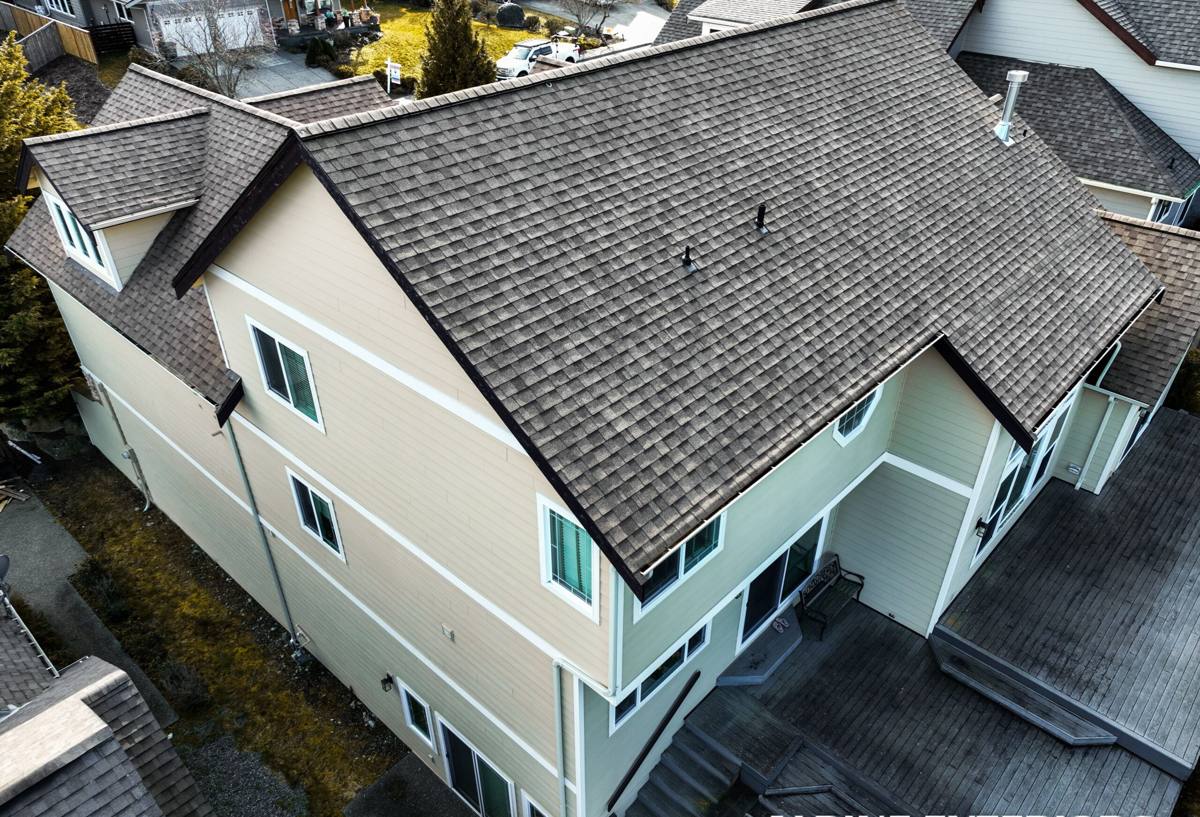
What Salt Air and Driving Rain Actually Do to a Deck
Salt Air
Airborne salt is corrosive to metal, and it doesn't take a waterfront lot to feel it — homes throughout Bayside get enough salt exposure off the Sound to accelerate rust on standard fasteners, brackets, and hardware over time. Once a fastener starts corroding, it loses holding strength quietly, often long before there's any visible sign on the deck surface.
Driving Rain
Storms off the Sound don't just fall straight down — they drive rain sideways into ledger boards, under flashing, and into any gap where water shouldn't be. A deck ledger attached to the house is the single most important connection on the structure, and it's also the spot most vulnerable to wind-driven rain if the flashing isn't detailed correctly.
Moss Season
Between the shade many Bayside lots get and the persistent damp, moss and algae can establish on a deck surface and stay active for eight or nine months of the year. Beyond looking bad, a mossy deck surface is genuinely slippery and holds moisture against the decking material, which shortens its life regardless of what it's made of.
What a Correctly Built Bayside Deck Requires
Framing and Structure
We frame with lumber rated for exterior, ground-contact-level exposure even when the deck itself is elevated, because splash-back and prolonged dampness treat framing almost as harshly as ground contact would in a drier climate. Joists are spaced and sized to the actual span and load, not just to a minimum code table, and every cut end gets sealed before it's covered — an untreated cut end is one of the fastest ways rot gets started in framing.
Ledger Attachment and Flashing
The ledger board — where the deck bolts to the house — gets proper structural fasteners (not just nails) and flashing that directs water away from the house wall rather than behind it. This is the detail we spend the most time on, because it's the one failure that's hardest to spot from the surface and most expensive to fix once it's caused rot in the house framing.
Fasteners and Hardware
Standard galvanized fasteners corrode faster in salt air than most homeowners expect. We use stainless steel or heavy hot-dip galvanized hardware rated for coastal exposure at every structural connection — joist hangers, ledger bolts, post bases — and coated deck screws or hidden fastener systems on the decking surface itself.
Drainage
Water needs somewhere to go, both across the deck surface and underneath it. Proper board spacing, a slight slope away from the house, and clear ventilation under the structure keep water moving instead of pooling — pooled water under a deck is where rot and moss both get their start.
Choosing a Decking Material for Bayside's Climate
There's no single right answer here — it depends on budget, how much upkeep you want to do, and how long you plan to stay in the home. Here's how the common options actually perform in this specific climate:
| Material | Upfront Cost | Moisture & Salt Air Performance | Moss/Algae Resistance | Maintenance |
|---|---|---|---|---|
| Pressure-treated wood | Lowest | Good if properly sealed and re-sealed regularly | Low — needs regular cleaning | Annual cleaning and re-sealing |
| Cedar | Moderate | Naturally rot-resistant but softer; needs sealing | Low to moderate | Annual cleaning, periodic sealing |
| Composite decking | Higher | Excellent — doesn't absorb moisture or corrode | Higher, but not immune — still needs periodic cleaning | Occasional washing, no sealing or staining |
| PVC decking | Highest | Excellent — fully moisture-resistant | Highest of the common options | Occasional washing |
For a lot of Bayside homeowners, composite or PVC decking earns back its higher upfront cost in avoided maintenance — no annual sealing, no repeat pressure-washing to keep moss from staining bare wood. Wood decking is a reasonable choice too, especially for homeowners who prefer the look and don't mind the yearly upkeep, but it requires more consistent attention in this climate to get a full service life out of it.
Our Build Process
Site Assessment
We start by walking the actual site — sun exposure, drainage patterns, how the house is sided, and where the deck will tie in. Bayside lots vary enough in shade and exposure that this step changes real decisions about material and detailing, not just the estimate.
Permitting
Most new decks and many rebuilds in Everett require a building permit, and the requirements can depend on deck height, size, and attachment to the house. We handle the permit process and build to code, including guardrail height, stair geometry, and structural connections — this isn't optional, and it protects you if you ever sell the home.
Demolition and Framing
If we're replacing an existing deck, we remove it down to solid framing or the ground, inspect for any hidden rot at the house connection, and address it before building anything new on top of it. New framing goes in with the fasteners and flashing detailed above.
Decking, Railing, and Finish
Decking is installed with correct spacing for drainage and expansion, railing is set to code height and spacing, and any wood surfaces get sealed before we consider the job finished. We walk the finished deck with you before we call it done.
Common Mistakes We See on Older Bayside Decks
- Standard (non-coastal-rated) fasteners used throughout, now visibly rusting or already failed
- Ledger boards nailed rather than bolted, with flashing missing or installed incorrectly
- Decking boards installed tight together with no gap, trapping moisture and moss growth
- No ventilation or clearance underneath the deck, leading to standing moisture and rot in framing
- Cut ends of framing lumber left unsealed, creating an entry point for rot
- Stains or sealants applied over dirt, moss, or mildew instead of a properly cleaned surface
Most of these aren't visible from a casual look at the deck — they show up as soft spots, movement in the railing, or a ledger that's started to separate from the house. If your deck is more than eight or ten years old and hasn't had this kind of inspection, it's worth having someone check the structure, not just the surface.
Keeping a Bayside Deck in Good Shape
Whatever material you choose, a few habits make a real difference in a climate with this much moss and moisture:
- Sweep leaves and debris off the deck regularly, especially in fall — trapped organic material feeds moss growth
- Wash the surface at least once or twice a year to remove moss and algae before it stains or gets slick
- Check and clear gaps between boards so water keeps draining rather than pooling
- Inspect railing connections and stair stringers annually for movement or looseness
- For wood decks, plan on re-sealing on a regular cycle rather than waiting until the wood looks dry and gray
- Look underneath the deck once a year for standing water, debris buildup, or signs of rot at the ledger
Why Hire a Crew That Already Works in Bayside
A deck built to a generic spec sheet can look fine on the day it's finished and still fail early in this climate. What matters is whether the crew building it understands how salt air treats hardware, how driving rain finds its way behind flashing that isn't detailed correctly, and how much moss pressure a shaded Bayside lot actually sees compared to a sunnier spot a few miles inland. That's not something you learn from a manual — it's something you learn by building and repairing decks in this specific part of Snohomish County, season after season, and seeing which details hold up and which ones don't.
We also know what Everett's permitting process actually requires for decks, which saves time and avoids the rework that comes from guessing.
Get a Straightforward Estimate
If you're planning a new deck or need to replace one that's showing its age, we're happy to take a look and give you an honest read on what it needs — no pressure, no upsell. Fill out the form below for a free estimate on your Bayside deck project.