 Everett
 Building Decks for Silver Lake's Particular Climate
Silver Lake sits in south Everett, close enough to Puget Sound to pick up salt-laden air on top of everything Snohomish County's wet season already throws at an exterior structure. Many homes here back up to the lake itself or sit on wooded lots with heavy tree cover, which means shade, damp ground, and slow-drying surfaces almost year-round. A deck built without that combination in mind — salt air, driving rain, and a moss season that can run from October into April — will show its age faster than the homeowner expects, usually starting with soft spots underfoot and green film on every horizontal surface.
We build and repair decks for Silver Lake homes on a regular basis, and the lessons from one job carry directly into the next. This page covers what actually holds up out here, what a correctly built deck involves from the footings up, and how our process works from the first estimate to the final walkthrough.
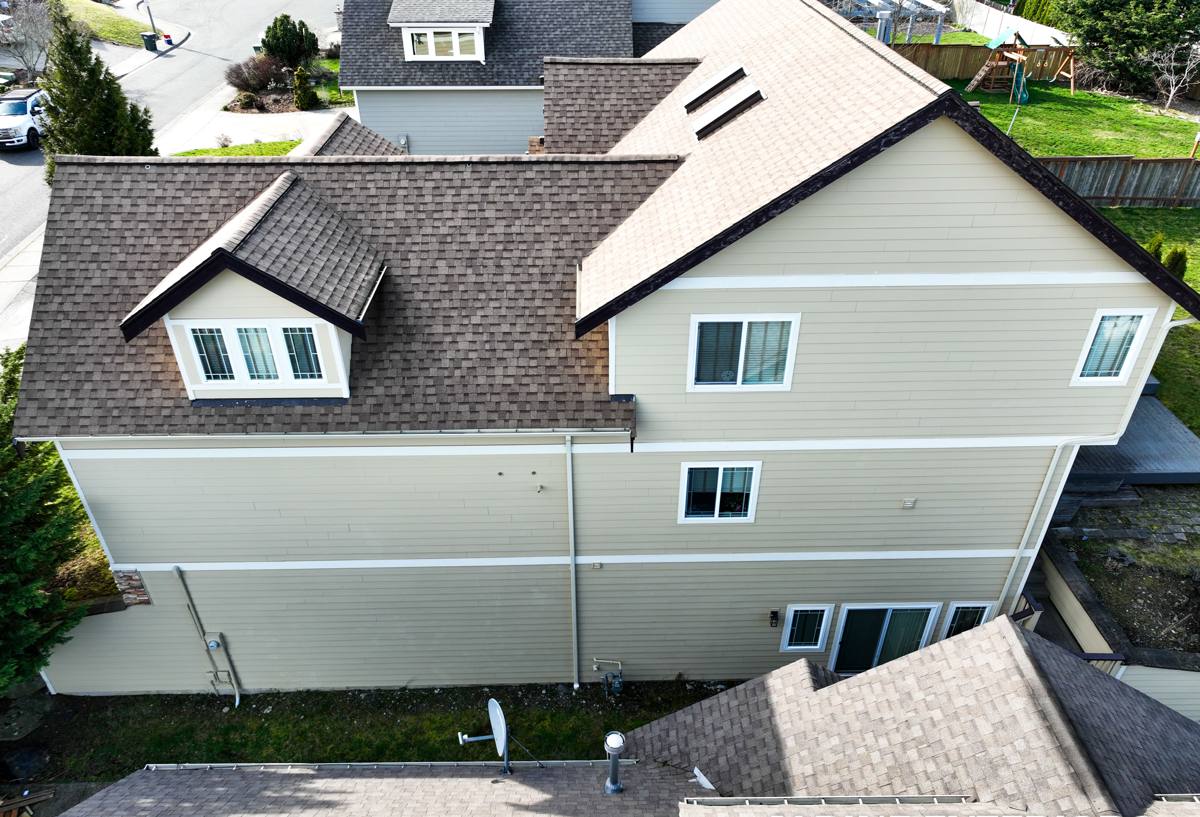
What This Climate Does to an Ordinary Deck
Everett's marine climate is often described as mild, and in terms of temperature it is. But mild temperatures paired with long stretches of moisture are exactly what breaks decks down over time. A few specific failure patterns show up again and again on older Silver Lake decks:
- Moss and algae film on decking boards, especially in shaded sections near trees or on the north side of the house, creating a slip hazard and holding moisture against the wood or composite surface.
- Fastener corrosion where standard coated screws or nails were used instead of stainless or high-grade coated hardware rated for coastal exposure — this shows up as rust streaking and, eventually, loosening boards.
- Ledger board rot where the deck attaches to the house, usually from missing or inadequate flashing that let water track behind the siding for years before anyone noticed.
- Soft or spongy joists underneath a deck that looks fine on the surface — the decking hides the problem until it's serious.
- Standing water on footings in yards with poor drainage, which speeds up post rot and can shift a deck's level over a few wet seasons.
None of this is unique to Silver Lake, but the combination of salt air corrosion and heavy shade-driven moss growth is more aggressive here than it is a few miles inland. That's the standard we build to.
Choosing the Right Decking Material
There's no single "best" decking material — there's a best material for a given budget, exposure, and how much upkeep the homeowner actually wants to do. Here's how the common options compare for a Silver Lake property specifically.
| Material | Moisture & Moss Resistance | Maintenance | Typical Lifespan | Relative Cost |
|---|---|---|---|---|
| Pressure-treated wood | Fair — needs sealing to perform well in shade and rain | Annual cleaning and re-sealing recommended | 10–15 years with upkeep | Lowest upfront cost |
| Cedar | Good natural resistance, but still needs sealing near the lake and under tree cover | Regular cleaning and periodic finish renewal | 15–20 years with upkeep | Mid-range |
| Composite decking | Very good — resists rot, but algae and moss can still grow on the surface film in constant shade | Periodic washing, no sealing or staining | 25–30 years | Higher upfront cost |
| PVC/capped polymer | Excellent — fully moisture resistant, easiest surface to keep moss-free | Occasional washing | 25–30+ years | Highest upfront cost |
For lots with heavy shade near the lake or mature trees, we lean toward composite or capped polymer when the budget allows — the lower maintenance burden matters more here than in a sunnier, drier part of the county. Wood is still a sound choice for homeowners who want that look and are willing to keep up with sealing on a schedule; we're upfront about that trade-off rather than talking anyone out of a material that suits their budget.
Where We Draw a Hard Line
We won't install decking directly over untreated or undersized framing, and we won't skip fastener upgrades to save a few dollars on a coastal-exposure job. Those aren't upsells — they're the difference between a deck that needs board replacement in year eight and one that doesn't.
What's Underneath Matters More Than the Surface
A deck is only as good as its structure, and structure is where most corner-cutting happens because it's invisible once the job is done. For Silver Lake conditions, we treat the following as non-negotiable:
Footings and Posts
Footings need to sit below frost depth and be sized for the actual load, not a rule-of-thumb minimum. On lots with poor drainage or heavy shade, we grade around footings to shed water rather than let it pool, since standing water is what accelerates post and hardware failure.
Ledger Attachment and Flashing
Where the deck meets the house, proper flashing — installed correctly, not just present — keeps water from tracking behind siding and into the wall assembly. This is the single most common failure point we find on older decks in this area, and it's almost always a flashing problem, not a framing problem.
Joist Protection
Joist tape or an equivalent moisture barrier on top of framing members adds real protection against rot in a climate that keeps wood damp for months at a stretch. It's inexpensive relative to the job and pays for itself the first time it prevents a joist replacement.
Railings, Fasteners, and Hardware
Salt air accelerates corrosion on any exposed metal, and a deck has a lot of exposed metal — structural connectors, fasteners, railing hardware, and stair brackets. We spec stainless steel or high-grade coated fasteners rated for coastal exposure rather than the standard hardware sold for general use. The cost difference is modest across an entire deck; the difference in how the hardware looks and performs after five wet seasons is not.
Hidden fastener systems are worth considering for composite and PVC decking in this climate for two reasons: fewer exposed screw heads means fewer points where water can sit and corrosion can start, and the deck surface stays cleaner-looking without visible fastener patterns collecting grime and moss.
Our Process for a Silver Lake Deck Project
The steps are the same on paper as any deck project, but how we execute each one is shaped by what we've learned building and repairing decks in this specific neighborhood.
- On-site assessment. We look at sun exposure, tree cover, drainage patterns, and — for repair or replacement jobs — the condition of existing framing before quoting anything.
- Design and material selection. We walk through the material comparison above against your budget and how much upkeep you actually want to commit to.
- Permitting. Most deck projects in Everett and unincorporated Snohomish County require a permit, particularly for elevated structures or anything attached to the house. We handle the permit process as part of the job.
- Structural work first. Footings, framing, ledger flashing, and joist protection go in before a single decking board is placed. This is the phase that determines whether the deck lasts 15 years or 30.
- Decking and railing installation. Boards, fasteners, and railing hardware are installed to the coastal-exposure standard described above, not a generic minimum.
- Final walkthrough. We go over the finished deck with you, including what maintenance it needs and on what schedule, before we consider the job done.
Permits and Codes in Everett and Snohomish County
Deck permitting requirements depend on the deck's height, size, and whether it's attached to the house, and requirements can differ slightly between the City of Everett and unincorporated Snohomish County depending on exactly where a Silver Lake property falls. Guardrail height, stair geometry, footing depth, and ledger attachment are all inspected items, not optional details. We pull permits and coordinate inspections as part of the project so homeowners aren't left navigating that process alone or discovering a code issue after the fact.
Keeping a Silver Lake Deck in Good Shape
Every deck, regardless of material, holds up better in this climate with a modest maintenance routine. Here's what we recommend to homeowners after we finish a project:
- Sweep or blow off leaves and debris regularly in fall — trapped organic matter is what feeds moss and algae growth.
- Wash the deck surface at least once a year, more often in heavily shaded areas, using a deck-safe cleaner rather than a pressure washer set too aggressively.
- Check and re-seal wood decking on the schedule appropriate to the product — don't wait for visible graying or water absorption to start.
- Inspect railings and stair connections annually for loose hardware, a common early sign of corrosion in coastal air.
- Keep gutters and downspouts near the deck clear so runoff isn't dumping extra water onto or under the structure.
- Look underneath the deck once a year if access allows — problems at the joists and posts are almost always visible before they become structural.
Why Local Experience on This Specific Neighborhood Matters
A deck built to a generic national standard will hold up fine in a lot of places. Silver Lake isn't one of them. The combination of tree-shaded lots, proximity to the lake, and Snohomish County's long wet season means the details that don't matter in a drier climate — flashing quality, fastener grade, drainage grading around footings — are exactly the details that determine whether a deck needs major work in year eight or still looks solid in year twenty.
Working this neighborhood regularly means we're not guessing at how a given lot drains or how much shade a particular street gets through the winter — we've already seen it on the job next door or the one before that. That familiarity shows up in fewer surprises during the estimate and fewer callbacks after the job is finished.
If you're planning a new deck or need an honest look at whether an existing one is still sound, we're happy to come out, walk the site, and put together a straightforward estimate — no pressure, no upsell script. Use the form below to get started.