 Everett
 Composite Decking Built for How Lake Stevens Actually Weathers
Lake Stevens sits inland from Puget Sound, but the weather that reaches it is still coastal Pacific Northwest weather: long stretches of steady rain from fall through spring, short shoulder seasons, and enough marine-influenced humidity in the air to keep outdoor wood surfaces damp for days at a time. Add the lake itself, tree cover on a lot of Snohomish County properties, and shaded north- and east-facing decks that never fully dry out, and you get conditions that are hard on any outdoor structure. Composite decking is a good match for that reality, but only when it's specified and installed correctly for this climate — not just installed the same way it would be in a drier region.
This page covers what a composite deck needs to hold up around Lake Stevens specifically: the moisture and moss pressure, the framing and drainage details that matter most, board selection, and what our installation process looks like from first visit to final walkthrough.
What This Climate Does to a Deck Over Time
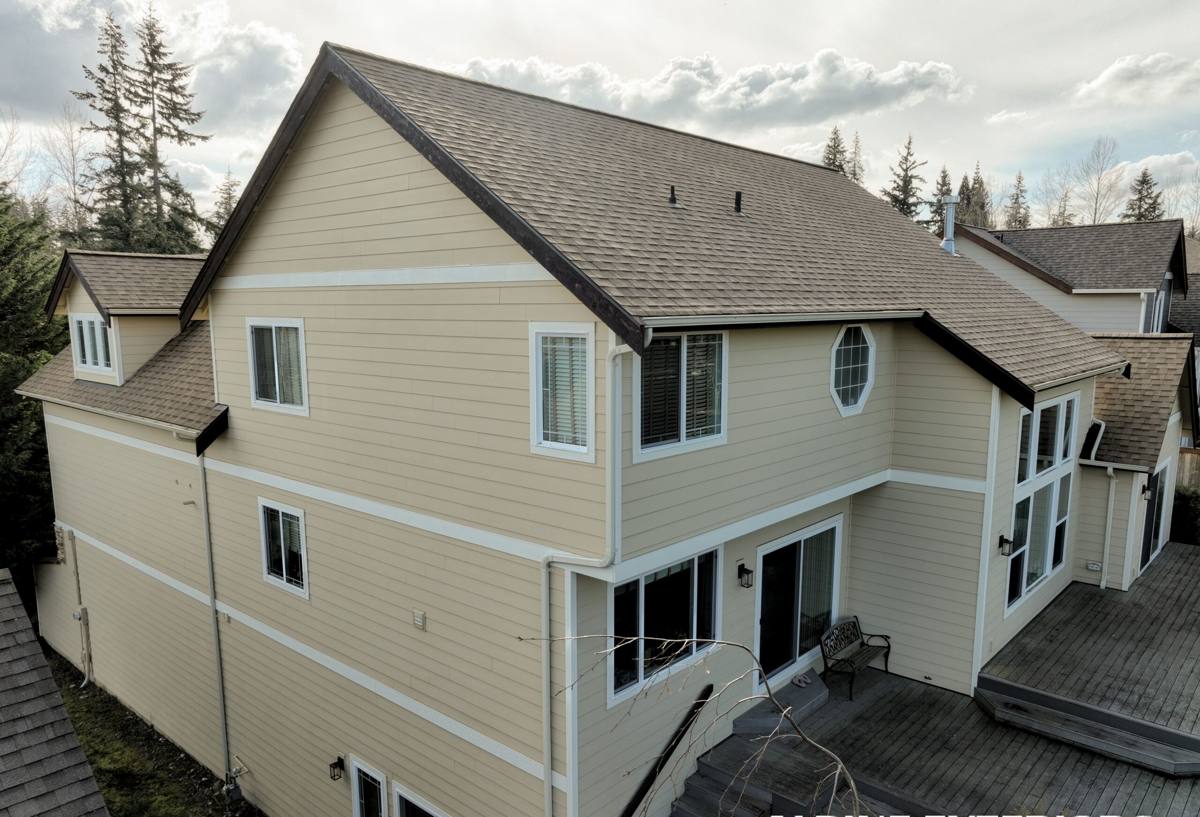
The failures we see on older or poorly built decks in this area follow a pattern, and it's almost never the decking material itself failing outright — it's what happened underneath or around it.
- Moss and algae growth on shaded or low-airflow deck surfaces, especially under trees or on the north side of a house, where a board stays damp long after the rain stops.
- Trapped moisture at the frame when joists, ledger boards, or fasteners weren't flashed or gapped properly, leading to rot in the structure even when the decking on top looks fine.
- Fastener corrosion from using hardware that wasn't rated for the sustained damp exposure common in Snohomish County, which shows up as staining or loosening boards years before it should.
- Poor drainage under low-clearance decks, where standing water and debris build up because there was never enough slope or ventilation designed in.
None of these are composite decking problems specifically — a wood deck with the same shortcuts fails faster and more visibly. But composite decking only delivers on its low-maintenance promise if the structure and details underneath it are done right the first time.
Composite vs. Wood Decking: What Actually Holds Up Here
Both materials can work in Snohomish County. The honest comparison comes down to what each one asks of you over the years you own the deck.
| Factor | Composite Decking | Cedar / Pressure-Treated Wood |
|---|---|---|
| Moisture absorption | Low — most boards are wood-plastic composite or capped, resisting swelling and rot | Higher — wood absorbs and releases moisture with the seasons, which drives warping and cracking |
| Moss and algae | Grows on the surface if shaded and damp, but doesn't feed on the material itself | Moss and algae can take hold in the wood grain and contribute to surface breakdown over time |
| Annual maintenance | Periodic cleaning; no staining or sealing required | Needs regular sealing or staining to keep moisture out, especially in a wet climate |
| Upfront cost | Higher material cost | Lower material cost |
| Long-term cost | Lower — minimal upkeep spend over 15–25 years | Higher — recurring labor and material cost for sealing/staining and board replacement |
| Appearance consistency | Consistent color and grain, doesn't gray or splinter | Natural look, but changes color and texture as it weathers |
For homeowners who want to spend their weekends doing something other than deck maintenance, composite is usually the better fit for this climate. For homeowners who prefer the look and feel of real wood and are willing to keep up with sealing on a schedule, wood is still a legitimate choice — we install both and will give you a straight answer on which fits your situation.
Why We're Selective About Which Composite Products We Install
Not every composite board on the market is built the same way, and in a climate this wet, the differences matter more than they would somewhere dry. We standardize on capped composite products with a documented moisture and stain warranty, because uncapped or budget composite boards can absorb moisture at cut ends and fastener holes over time, which defeats the purpose of switching away from wood in the first place. We'll walk you through the specific product options and warranty terms for your project rather than installing whatever's cheapest.
What a Correct Composite Deck Installation Involves
A composite deck is only as good as the frame underneath it. Here's what we treat as non-negotiable on every Lake Stevens installation, whether it's a full rebuild or a resurface over an existing structure.
Substructure and Framing
Pressure-treated or engineered composite framing sized correctly for the joist spacing the decking manufacturer requires — composite boards typically need tighter joist spacing than wood, especially at angles or on stairs, and skipping this is one of the most common causes of a bouncy or sagging composite deck.
Drainage and Ventilation
Proper slope away from the house, gaps at board ends for water to escape, and clearance underneath for airflow. On lower decks close to grade, this is where moss and standing moisture cause the most trouble, so we pay particular attention to it on ground-level builds.
Ledger and Flashing
Where a deck attaches to the house, correct flashing keeps water from working its way behind siding or into the rim joist — a detail that's easy to shortcut and expensive to fix later once rot has set in behind the wall.
Fasteners and Hardware
Corrosion-resistant, code-rated hardware throughout, matched to what the decking manufacturer specifies. Hidden fastener systems, where the board manufacturer supports them, give a cleaner surface and fewer exposed screw holes for water to sit in.
Choosing the Right Board for a Lake Stevens Property
A few decisions matter more here than they would in a drier climate:
- Capped composite over uncapped — the polymer shell resists moisture absorption and staining at the surface, which matters when a deck sees weeks of rain without a real dry-out period.
- Color and heat — darker boards in full sun can get hot underfoot in summer, but on shaded or tree-covered lots, darker colors also show less moss and organic staining than light colors do.
- Surface texture — a board with more texture or grain pattern hides pollen, moss residue, and general grime better than a smooth, glossy finish, which stays cleaner-looking longer between washes on a shaded deck.
- Board width and grain direction — running boards to shed water efficiently and match the drainage plan, not just for looks.
Our Process
1. On-Site Assessment
We look at drainage, sun and shade exposure, existing structure condition if it's a rebuild, and how the deck ties into your house. This is where we catch things like an under-flashed ledger board or a frame that's already showing rot, before they become part of the plan.
2. Design and Product Selection
We walk through board options, color, layout, and railing choices, and give you a clear, itemized quote before any work starts — no vague allowances.
3. Framing and Structural Work
All framing, flashing, and drainage details are built to the composite manufacturer's spec, not generic deck-building shortcuts, since this is what determines how the deck performs in wet weather over time.
4. Decking Installation
Boards, fastening system, stairs, and railing installed with attention to gapping and drainage at every joint.
5. Final Walkthrough
We go over care and cleaning with you directly and point out anything specific to your lot's sun/shade pattern that will affect how the deck ages.
Maintenance in a Wet, Mossy Climate
Composite decking cuts maintenance significantly compared to wood, but "low-maintenance" isn't "no-maintenance" here. A simple seasonal routine keeps a composite deck looking right in Snohomish County:
- Sweep off leaves, needles, and debris regularly — organic material trapped against the board surface is what feeds moss and algae growth.
- Wash the deck with soap and water (or a manufacturer-approved cleaner) once or twice a year, more often on shaded sections.
- Keep gutters and downspouts near the deck clear so runoff isn't dumping extra water onto the surface.
- Trim back overhanging branches where possible to improve sun exposure and airflow on chronically damp sections.
- Check railing posts and stair connections annually for movement, since hardware is the first place a problem usually shows up.
What Composite Decking Typically Costs
Every deck is different, but these are the factors that move the price most, so you know what you're actually paying for.
| Cost Factor | Why It Matters |
|---|---|
| Deck size and shape | Square footage plus complexity — angles, curves, and multiple levels add labor and material |
| Height off grade | Taller decks need more substantial framing, railing (often code-required above a certain height), and sometimes stairs |
| Board tier and brand | Composite pricing varies by capping technology, warranty length, and color/texture line |
| Existing structure condition | A resurface over sound framing costs less than a full tear-out and rebuild of rotted substructure |
| Railing and stair details | Composite or metal railing systems, cable rail, and stair complexity all add cost beyond the deck surface itself |
| Site access | Tight side yards, slope, or limited equipment access can add labor time |
We give a firm, itemized quote after the site visit rather than a ballpark over the phone, because the framing condition and site details above genuinely change the number.
Why Hiring Locally in Lake Stevens Matters
A crew that regularly works Lake Stevens and the surrounding Snohomish County area already knows how the local drainage, shade patterns, and permit requirements tend to run on lake-adjacent and tree-covered lots. That means fewer surprises during the build — the framing plan accounts for the moisture load this area actually gets, not a generic spec sheet. It also means we're a known, reachable crew if you ever have a warranty question or a maintenance question down the road, rather than a company that did one job in the area and moved on.
Before hiring anyone for composite decking work, it's worth asking a few direct questions:
- Are you licensed and insured in Washington, and can I see proof?
- Which composite brands and product lines do you install, and why?
- What's your framing spacing and fastener plan for this specific board?
- How do you handle drainage and flashing where the deck meets the house?
- What does your warranty cover, and what's the manufacturer's warranty on top of it?
A contractor who answers these clearly and specifically, rather than vaguely, is generally one who does this work carefully and often.
Get a Free Estimate
If you're planning a new composite deck or replacing an aging wood deck in Lake Stevens, we're happy to take a look and give you a straightforward, no-pressure estimate — including honest input on board selection, layout, and what your specific lot's sun and drainage situation calls for. Use the form below to get started.