 Everett
 Asphalt Shingle Roofing Built for Bayside's Conditions
Bayside sits close enough to the water that homes here take on a different kind of weather beating than roofs just a few miles inland. Salt-laden air, wind-driven rain off Port Gardner Bay, and Snohomish County's long gray stretch from October through May put steady pressure on asphalt shingles year after year. A roof that would hold up fine in a drier, more sheltered part of Everett can wear out faster here if it wasn't installed with these conditions in mind.
Asphalt shingles remain the most practical roofing choice for most Bayside homes — they're proven, reasonably priced, and available in product lines rated for high wind and algae resistance. But "asphalt shingles" isn't a single product decision. The underlayment, ventilation, flashing details, and fastening pattern matter just as much as the shingle brand printed on the wrapper, and in a coastal neighborhood like this one, getting those details right is what separates a roof that lasts its full service life from one that starts failing at the edges after ten or twelve years.
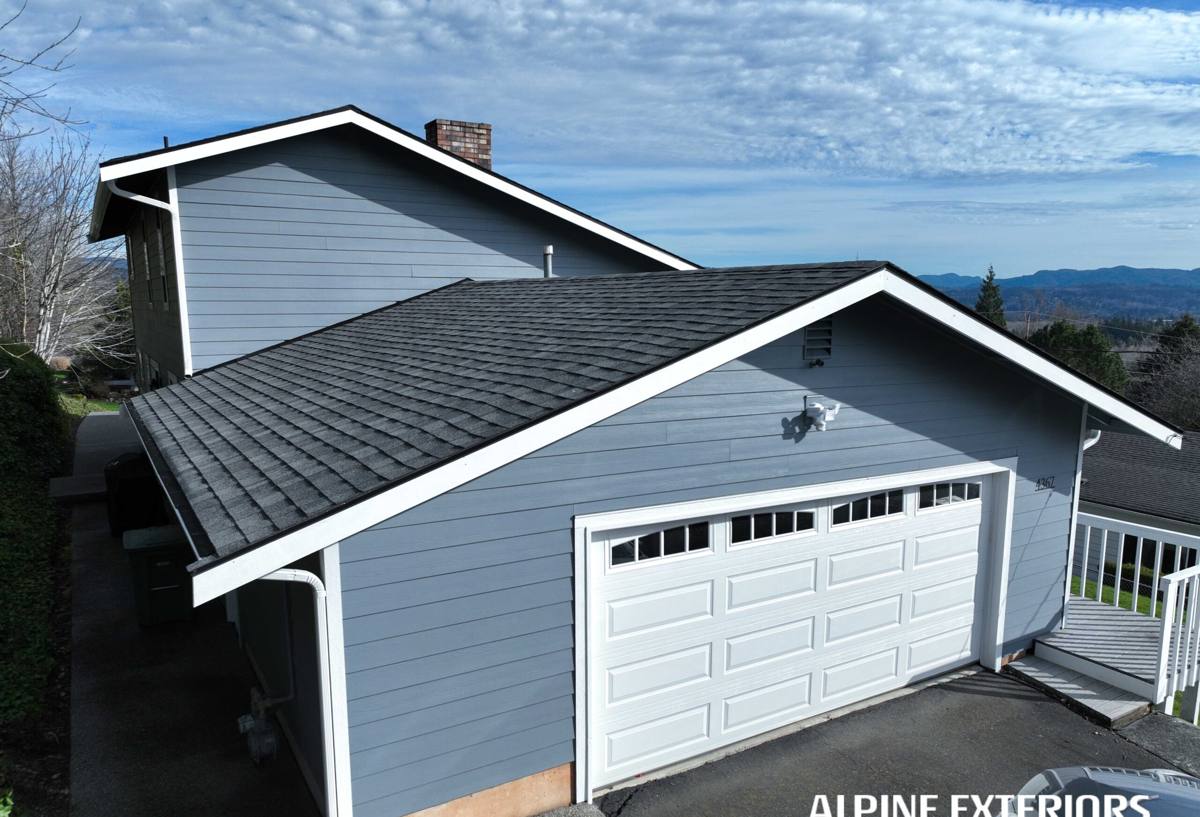
What Bayside's Climate Actually Does to a Roof
Salt Air and Corrosion
Homes within a mile or two of the water deal with airborne salt that settles on every exposed surface, including the roof. Salt accelerates corrosion on exposed metal — nail heads, flashing, drip edge, and vent stacks — well before the shingles themselves show their age. Standard electro-galvanized fasteners and thin flashing stock don't hold up as well here as they would further inland.
Driving Rain
Storms coming off the Sound don't just fall straight down — wind pushes rain sideways and up under shingle tabs, valleys, and roof-wall intersections. A roof system that relies on shingles alone to keep water out, without proper underlayment and flashing behind them, will eventually leak in exactly these spots, even if the shingles themselves look fine from the ground.
Moss and Moisture
Snohomish County's mild, wet winters are close to ideal growing conditions for moss and algae. Moss that gets a foothold on a roof doesn't just look bad — it holds moisture against the shingle surface, works its way under tab edges, and can lift shingles enough for wind and rain to get underneath. North-facing slopes and areas shaded by mature trees, common throughout Bayside's older residential streets, are the first places moss tends to establish.
What a Correctly Installed Asphalt Shingle Roof Includes
A roof that's going to hold up in this environment needs more than shingles nailed to plywood. Every layer of the system has a job:
- Ice-and-water shield or high-quality synthetic underlayment at eaves, valleys, and roof penetrations, where wind-driven rain is most likely to find a way in
- Stainless or hot-dip galvanized flashing and fasteners in coastal zones, rather than standard-grade materials that corrode faster in salt air
- Proper attic and roof ventilation so moisture from inside the house doesn't condense against the roof deck and rot it from underneath
- Algae-resistant shingles where the manufacturer offers them, which slow (though don't eliminate) moss and algae growth on shaded slopes
- Correct nailing pattern and fastener count per the manufacturer's high-wind installation instructions — this is often where warranty claims get denied when it's skipped
- Sealed, properly lapped valleys and step flashing at any wall or chimney intersection, done by hand rather than relying on caulk to bridge a gap
None of this is exotic. It's standard trade practice done correctly, with materials matched to a coastal, high-moss environment rather than a generic inland install.
Signs a Bayside Roof Needs Attention
Because damage often starts underneath the shingles rather than on the surface, homeowners frequently miss the early warning signs. Worth checking for:
- Granules collecting in gutters or at downspout outlets — a sign shingles are wearing thin
- Moss visible on north-facing slopes or in shaded valleys
- Curling, cupping, or lifted tabs, especially on slopes exposed to prevailing wind
- Rust staining below flashing, vent stacks, or nail heads
- Soft spots, sagging, or discoloration on interior ceilings after a heavy rain event
- Daylight visible through the roof deck from inside the attic
Any one of these on its own isn't necessarily an emergency, but they're worth a professional look rather than a wait-and-see approach — moisture problems on a roof rarely improve on their own.
Repair, Re-Roof, or Full Replacement
Not every roof problem in Bayside means a full tear-off. The right call depends on the age of the roof, how widespread the damage is, and what's happening underneath the shingles.
| Situation | Typical Approach | Why |
|---|---|---|
| Isolated leak, roof under 12-15 years old | Targeted repair | Flashing or localized shingle damage can usually be fixed without disturbing the rest of a sound roof |
| Moss buildup, shingles otherwise intact | Cleaning plus preventive treatment | Removing moss and addressing the moisture source can add years of life if the deck below is still solid |
| Widespread granule loss, curling shingles | Full re-roof | Once the shingle mat itself is degrading broadly, patching individual spots doesn't solve the underlying wear |
| Roof deck soft, stained, or rotted in multiple spots | Tear-off and replacement | Underlayment and decking issues mean new shingles over the top won't fix the real problem |
We'll always tell you honestly which category a roof falls into rather than push a full replacement when a repair will do the job.
Cost Factors for Bayside Homes
Asphalt shingle roofing costs vary by roof size, pitch, layers of existing roofing to remove, and material grade — we don't quote broad numbers without seeing the roof, since guessing does homeowners a disservice. What tends to move the price on a Bayside project specifically:
- Roof complexity — number of valleys, dormers, and roof-wall intersections, each of which needs hand-flashed detail work
- Corrosion-resistant materials — upgraded flashing and fastener grades cost more up front but reduce premature failure in salt air
- Ventilation upgrades — older Bayside homes sometimes need added intake or exhaust venting brought up to current standards during a re-roof
- Deck repair — any rotted plywood found once old shingles come off needs to be replaced before new roofing goes down
- Access and pitch — steeper roofs and tighter lot access add labor time
We walk every roof and give a written estimate that breaks these out, so there's no guessing at what you're paying for.
Our Process on a Bayside Roofing Project
- On-site inspection — we get on the roof (not just a look from the ground) and check the deck, flashing, ventilation, and shingle condition
- Written estimate — a clear scope of work and cost breakdown, with repair and replacement options laid out honestly
- Material selection — we help you choose a shingle line and color rated for wind and algae resistance, appropriate for a coastal Snohomish County home
- Tear-off and deck check — old roofing removed, deck inspected and repaired where needed before anything new goes down
- Installation — underlayment, flashing, ventilation, and shingles installed to manufacturer spec, including the high-wind fastening pattern
- Final walkthrough — we review the finished roof with you and go over any maintenance recommendations specific to your property
Why It Matters to Hire a Crew That Works This Neighborhood
A roofing crew that mostly works drier, inland areas may not automatically reach for corrosion-resistant flashing or think through moss-prone north slopes the way a crew that regularly works Bayside and the rest of coastal Everett does. It's not a matter of skill — it's familiarity with what actually fails first in this specific environment. We've seen how salt air ages exposed metal, how driving rain finds gaps in a rushed flashing job, and how quickly moss can establish on a shaded slope through a wet Snohomish County winter. That local pattern recognition shapes how we spec and install every roof we put on in this area.
It also matters for something more practical: being reachable. A roof issue after a windstorm or heavy rain event isn't something you want to wait days for a distant contractor to schedule. Working consistently in Bayside and the surrounding Everett neighborhoods means we're close by if something needs a second look after the job is done.
Maintenance That Extends Roof Life Here
A well-installed asphalt shingle roof in Bayside can still benefit from routine attention, given the moss and moisture load it deals with each winter:
- Keep gutters clear so water doesn't back up under the shingle edge at the eaves
- Trim back tree limbs overhanging the roof to reduce shade and debris buildup
- Have moss professionally removed rather than pressure-washed, which can strip granules and shorten shingle life
- Schedule a roof check after major windstorms, especially on older roofs
- Address small flashing or sealant issues promptly, before a minor gap becomes a deck-level leak
If you're dealing with an aging roof, visible moss, or you just want an honest read on how many years a Bayside roof has left, we're happy to take a look. Request a free, no-pressure estimate using the form below and we'll walk the roof and give you a straight answer.