 Everett
 Asphalt Shingle Roofing Built for Forest Park's Climate
Forest Park sits close enough to Puget Sound and the Snohomish River basin that homes here deal with a specific combination of weather stress: salt-laden air moving in off the water, long stretches of driving rain through fall and winter, and shaded, tree-lined lots that hold moisture and grow moss faster than roofs a few miles inland. An asphalt shingle roof that's installed correctly can handle all of that for decades. One that's installed with shortcuts — thin underlayment, skipped flashing details, poor ventilation — will show problems in Forest Park years before it would in a drier, more open neighborhood.
We work on roofs throughout Everett and Snohomish County, and the asphalt shingle jobs we do in Forest Park specifically get extra attention paid to moisture management and ventilation, because that's where roofs in this area actually fail. This page covers what a correct asphalt shingle roof looks like for this neighborhood, what our process involves, and why local experience matters more than most homeowners realize.
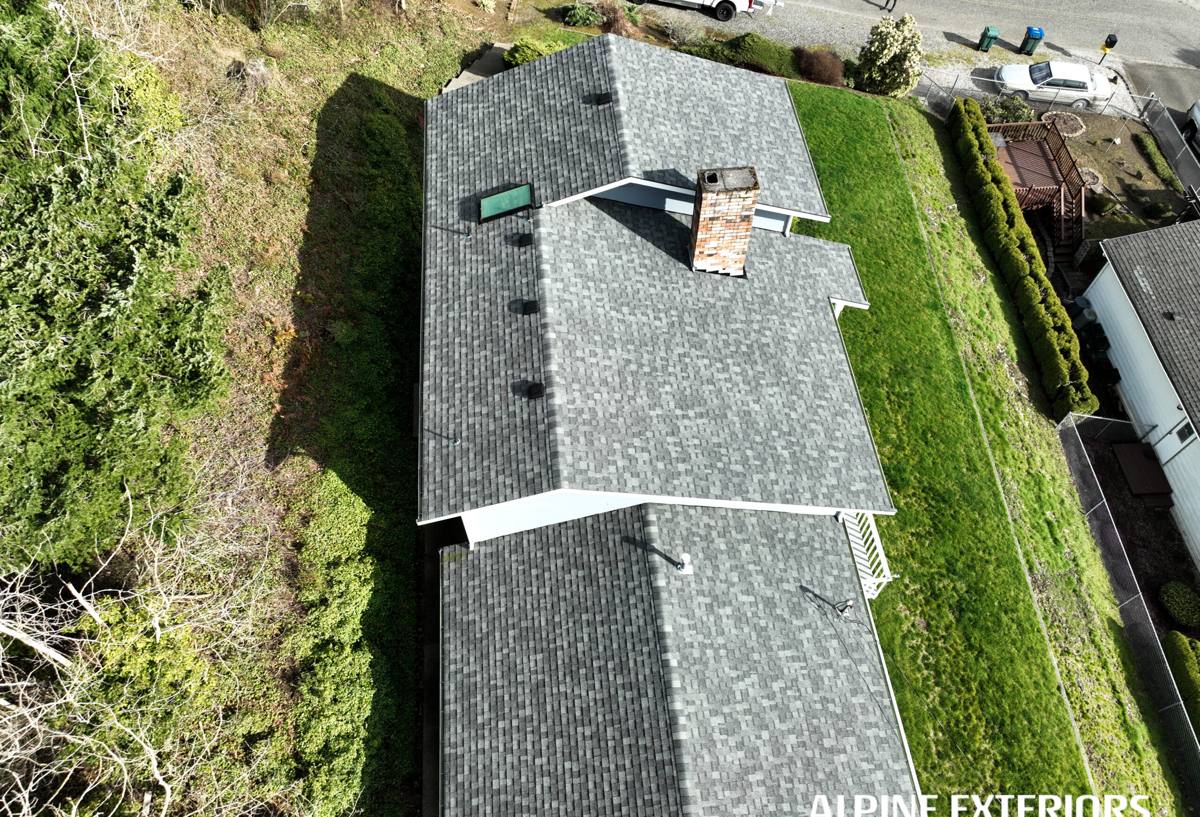
Why Forest Park's Conditions Are Tougher on a Roof Than They Look
Salt Air and Metal Fasteners
Everett's proximity to Puget Sound means airborne salt reaches further inland than most people assume, especially on days with onshore wind. Salt accelerates corrosion on exposed metal — nail heads, flashing, drip edge, and vent stacks. Standard electro-galvanized fasteners can start showing rust streaks on shingles well before the shingles themselves are worn out. We use corrosion-resistant fasteners and flashing on every roof in this area, not just the ones closest to the water, because it's cheap insurance against a problem that's expensive to fix after the fact.
Driving Rain and Wind-Driven Water
Rain in this part of Washington rarely falls straight down. Storms off the Sound tend to push rain sideways, which means water gets forced up and under shingle edges, around vent penetrations, and into valleys in ways that vertical rain never would. A roof designed for a drier or calmer climate — with minimal underlayment overlap or basic nail-only valley work — can leak in Forest Park conditions even when every shingle is intact. Proper underlayment coverage and valley construction matter as much as the shingles themselves.
Moss, Shade, and Slow-Drying Roofs
Many lots in and around Forest Park have mature tree cover, which is part of the neighborhood's character but also means roof sections stay shaded and damp longer after a storm. Moss and algae take hold fastest on north-facing slopes and anywhere debris collects. Left unchecked, moss lifts shingle edges, holds water against the roof deck, and shortens the life of the roof significantly. This is a maintenance issue as much as an installation issue — it needs to be part of how the roof is cared for after it goes on, not just how it's built.
What a Correct Asphalt Shingle Installation Includes
A lot of roofing problems trace back to steps that were skipped or rushed, not to the shingles themselves. For Forest Park homes, we treat the following as non-negotiable parts of the job:
- Full tear-off to bare deck when the existing roof is being replaced — no roofing over old layers, which traps moisture and hides deck damage
- Deck inspection and repair of any soft, delaminated, or water-stained sheathing before anything new goes down
- Ice-and-water shield or high-quality synthetic underlayment across the full roof, with extra coverage at eaves, valleys, and low-slope transitions
- Properly lapped and sealed valley flashing, sized for real wind-driven water, not just vertical runoff
- Corrosion-resistant step flashing and counter-flashing at every wall, chimney, and skylight intersection
- Balanced intake and exhaust ventilation so the attic can actually dry out between storms
- Correct nailing pattern and placement per the manufacturer's wind-rating requirements, not just "enough nails"
- Drip edge at eaves and rakes to keep water off the fascia and out of the roof edge
None of these steps are unusual or specialty items — they're standard practice done properly. The difference in Forest Park is that skipping any one of them shows up faster because the climate doesn't give a marginal installation any slack.
Choosing the Right Shingle for This Neighborhood
Asphalt shingles come in a range of grades, and the right choice depends on budget, roof slope, sun exposure, and how much tree cover the property has. For most Forest Park homes, we steer the conversation around a few practical factors rather than pushing the most expensive option by default.
| Factor | Why It Matters Here |
|---|---|
| Algae-resistant granules | Shaded, damp lots see algae and moss growth faster — this coating slows it down but doesn't eliminate the need for periodic cleaning |
| Wind rating | Storm systems off the Sound can bring sustained wind; a higher wind rating reduces the chance of lifted or torn shingles |
| Shingle thickness/weight | Heavier shingles hold up better to repeated wet-dry cycling common in this climate |
| Warranty structure | Manufacturer warranties are prorated and depend on correct installation — the installation is often the bigger factor in actual roof life |
| Color and reflectivity | Darker shingles on sun-exposed south slopes run hotter; lighter colors can help on those sections, though most Forest Park roofs are shade-dominant |
We'll walk through these trade-offs on-site rather than recommend a single product for every roof — a heavily shaded, tree-covered lot and an open, sun-exposed one a few blocks away can call for different priorities even within the same neighborhood.
Our Process for Forest Park Roofing Projects
1. On-Site Assessment
We look at the roof from the ground and, when safe, from the roof itself — checking current shingle condition, flashing, ventilation, and signs of moss or moisture damage. We also look at tree cover and drainage patterns specific to the lot, since those drive a lot of the maintenance conversation later.
2. Written Estimate
You get a clear breakdown of scope — tear-off, deck repair allowances, underlayment, flashing, shingle choice, and ventilation work — so there's no ambiguity about what's included before work starts.
3. Tear-Off and Deck Repair
Old roofing comes off completely, and the deck gets inspected before a single new material goes down. Any repairs needed are handled at this stage, not discovered — and charged for — after the roof is already covered.
4. Underlayment, Flashing, and Shingle Installation
This is where the climate-specific details above get built in: full underlayment coverage, properly lapped valleys, corrosion-resistant flashing, and correct fastening.
5. Final Walkthrough
We review the completed roof with you, cover basic maintenance expectations for the area — particularly around moss and debris — and make sure everything matches what was in the estimate.
Maintenance That Actually Extends Roof Life Here
Even a well-installed roof in Forest Park benefits from periodic attention, given the tree cover and moisture in this area. A short seasonal checklist covers most of it:
- Clear gutters and valleys of needles and leaf debris at least twice a year, more often under heavy tree cover
- Have moss growth treated or removed before it spreads across a slope, rather than after
- Check attic ventilation isn't blocked by insulation or debris — poor airflow accelerates deck rot from the inside
- After major windstorms, do a visual check for lifted or missing shingles, especially on north-facing slopes
- Address any interior ceiling staining right away — it's almost always cheaper to fix as a small flashing or shingle repair than as a full leak investigation later
Why Local Experience in Forest Park Matters
A roofing crew that works across Snohomish County regularly sees how differently roofs age depending on exposure, tree cover, and proximity to the water — even within Everett itself. That matters when we're recommending underlayment coverage, flashing details, or ventilation upgrades for a specific property, because the right answer for a shaded Forest Park lot isn't always the right answer for a sun-exposed roof elsewhere in the city. Crews that don't work this area regularly tend to apply a generic approach that may not account for the moss, salt air, and wind-driven rain this neighborhood deals with every year.
We also know what county permitting and inspection expects for reroofing work, which keeps projects moving without avoidable delays.
Get a Free Estimate for Your Forest Park Roof
If your roof is showing granule loss, moss buildup, curling shingles, or you're just not sure how much life it has left, we're glad to take a look. Use the form below to request a free, no-pressure estimate, and we'll walk you through exactly what your roof needs and why.