 Everett
 Windows in Glenhaven Take a Different Kind of Beating
Glenhaven sits close enough to Puget Sound and the Snohomish County waterways that homes here deal with a specific combination of weather stress most inland neighborhoods don't. Salt-laden air corrodes hardware and finishes faster than it would twenty miles east. Wind-driven rain off the Sound doesn't just fall on your windows, it gets pushed sideways into every gap, seam, and weep hole. And the long, wet moss season that runs from fall through spring keeps trim, sills, and siding around your windows damp for months at a time. None of that is dramatic on its own, but stacked together, year after year, it's why we see window failures in Glenhaven that show up sooner than the manufacturer's brochure would suggest.
None of this means Glenhaven is a bad place to own a home — it just means window replacement here needs to account for conditions the window itself, and the person installing it, will actually face. That's the lens we bring to every job in this neighborhood.
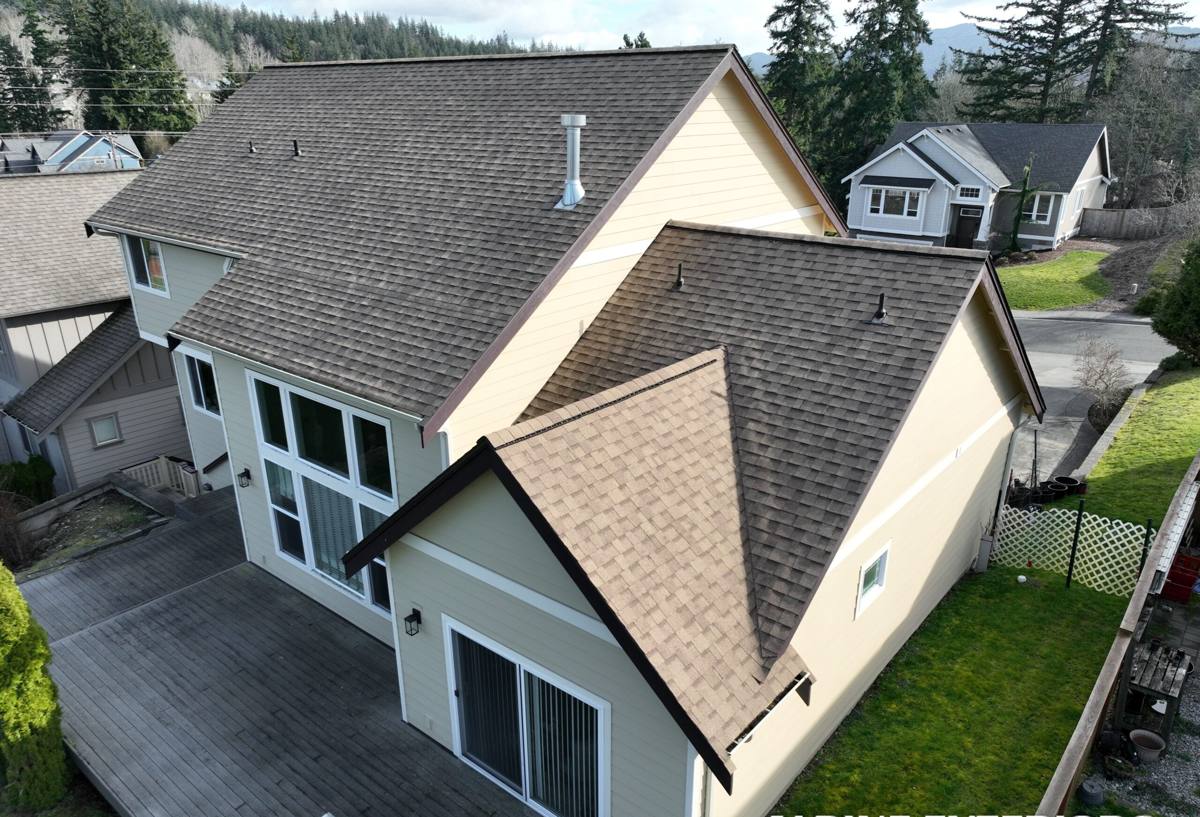
How the Climate Actually Damages Windows Here
Salt Air and Hardware
Salt in the air accelerates corrosion on anything metal — hinges, cranks, balance systems, and screws. Once corrosion sets in, a window that used to open and close smoothly starts binding, and the seal around the sash stops closing evenly. That's when air and water start finding their way in.
Driving Rain and Wind Pressure
A window can be perfectly watertight in a light rain and still leak in a Sound storm, because wind-driven rain hits at an angle and under pressure. Flashing, sill pans, and the way the window is sealed to the wall matter as much as the window unit itself. A lot of leaks we find in Glenhaven aren't the window's fault at all — they're the installation's fault.
Moss, Moisture, and Wood Rot
Extended damp seasons keep moisture sitting against wood trim, sills, and the framing around older windows. Where moss and organic buildup collect near a window opening, that moisture gets held against the wall longer, which is exactly the condition that leads to soft sills and rot in the framing behind the window — often invisible until the window itself starts to fail.
Signs a Glenhaven Home Needs Window Replacement
Some of these show up gradually, which is why homeowners often live with a failing window for a year or two before addressing it. Worth checking for:
- Visible condensation or fogging between the panes of a double-pane window (a sign the seal has failed)
- Drafts you can feel with your hand near the sash or frame on a windy day
- Windows that are hard to open, close, or lock, or that no longer sit flush
- Soft, discolored, or spongy wood on the sill or trim around the window
- Visible corrosion on hinges, cranks, or hardware
- A noticeable rise in heating costs without another clear cause
- Paint or finish peeling and bubbling around the window frame, inside or out
- Persistent moss or dark staining on trim directly above or below a window
One or two of these on their own might just need a repair. Several together, especially on a home more than 15-20 years old, usually mean it's time to talk about replacement.
What a Correct Window Replacement Job Actually Involves
Swapping in a new window is the easy part. Getting the water management right around it is what determines whether that window is still performing well in ten years, especially with the rain load a Glenhaven house takes on. A proper job includes:
- Removing the old window and inspecting the framing and sill underneath for rot or moisture damage before anything new goes in
- Repairing or replacing any compromised framing rather than sealing over it
- Installing a sloped sill pan so any water that does get past the window drains outward, not into the wall
- Properly integrating flashing with the home's existing weather-resistive barrier, layered so water sheds down and out, never trapped behind the siding
- Sealing and insulating the gap between the window frame and rough opening correctly, not just caulking the exterior trim and calling it done
- Confirming the window operates, locks, and seals correctly before the crew leaves
Skipping any of these steps is how a brand-new window ends up leaking within a couple of years. We treat the flashing and sill detail as seriously as the window itself, because in this climate that's usually where failures actually start.
Choosing the Right Window for a Glenhaven Home
There's no single "best" window material — it depends on your home's exposure, your budget, and how much upkeep you want to take on. Here's how the common options compare for this area:
| Frame Type | Salt Air / Moisture Performance | Maintenance | Typical Lifespan |
|---|---|---|---|
| Vinyl | Good — won't rust or rot, handles moisture well | Low — occasional cleaning | 20-30 years |
| Fiberglass | Very good — stable in temperature swings and moisture, resists corrosion | Low | 30-40+ years |
| Wood | Requires protection — vulnerable to the sustained dampness of moss season if finish isn't maintained | High — regular repainting/sealing | Varies widely with upkeep |
| Wood-clad (wood interior, metal or vinyl exterior) | Good exterior protection, but relies on the cladding seal staying intact | Moderate | 20-30 years |
| Aluminum | Poor in salt air without a quality anodized or powder-coat finish — prone to corrosion and is a poor thermal performer | Moderate to high | Varies |
For most Glenhaven homes, we steer people toward vinyl or fiberglass because they hold up against corrosion and repeated wetting without the ongoing maintenance a solid wood frame demands in this climate. That's not a knock on wood windows — they can look great and perform well — it's just an honest trade-off: they need more attention here than they would in a drier inland location, and we'd rather tell you that upfront than sell you something that turns into a maintenance chore.
Glass Packages Worth Considering
Double-pane, low-E glass with argon fill is the practical baseline for this region — it cuts heat loss and helps with condensation control on cold, damp mornings. Triple-pane adds further insulation value but at added cost and weight; it's worth discussing if a room has a particularly exposed or drafty orientation, but it's not a must for every window in the house.
What Drives the Cost of a Window Replacement Project
| Factor | Why It Matters |
|---|---|
| Number and size of windows | The most direct driver of total project cost |
| Frame material | Vinyl is typically the most budget-friendly; fiberglass and wood cost more upfront |
| Condition of existing framing | Rot or water damage found during removal adds repair work before the new window goes in |
| Full-frame vs. insert replacement | Full-frame replaces down to the studs and is more thorough; inserts fit into an existing sound frame and cost less |
| Access and home height | Second-story or hard-to-access windows take more time and equipment |
| Trim and finish work | Matching existing interior trim or upgrading exterior trim adds labor |
We won't quote a price without seeing the windows and the framing underneath — anyone who does is guessing. What we can tell you honestly is that if your existing framing has moisture damage, a straightforward window swap can turn into a bit more scope once we open things up. We'd rather flag that possibility before we start than surprise you mid-project.
Our Process for Glenhaven Window Replacement Projects
Because we work jobs throughout Everett and the surrounding Snohomish County area, we're familiar with the kind of exposure a Glenhaven home typically faces — how close it sits to weather off the Sound, how long moisture tends to linger on north- and west-facing walls, and where moss buildup tends to concentrate around openings. That shapes a few things about how we approach a job here:
- We inspect sill and framing condition on every window before quoting, not just after removal
- We prioritize flashing and drainage detail suited to wind-driven rain, not just a caulked seal
- We recommend frame materials based on actual exposure on your home, not a one-size answer
- We schedule around the weather realistically — an open window opening shouldn't sit exposed on a day rain is likely
A crew that only occasionally works this area may not think to check for these things by default. It's not a matter of skill — it's a matter of what conditions they're used to planning around.
After Installation: Keeping Glenhaven Windows Performing
New windows still benefit from a little seasonal attention in this climate:
- Rinse salt residue off exterior frames and hardware periodically, especially after storms
- Keep weep holes clear of debris and moss so water can drain out as designed
- Wipe down tracks and hardware to keep moving parts from binding
- Check exterior caulking annually and touch up if it's cracking or pulling away
- Keep gutters and downspouts clear so runoff isn't sheeting directly down over window openings
None of this is heavy maintenance, but a few minutes twice a year goes a long way toward getting the full lifespan out of a window investment in this climate.
Get a Straight Answer on Your Glenhaven Windows
If your windows are drafty, hard to operate, fogging between the panes, or showing soft trim, it's worth having them looked at before another wet season passes. We'll walk your home, tell you honestly what we see, and give you a free, no-pressure estimate — no obligation, just a clear picture of your options.