 Everett
 Roofing in Delta: A Different Set of Demands
Delta sits close enough to the water and to Everett's marine weather patterns that roofs here take a different kind of beating than roofs twenty miles inland. Salt-laden air moves through the neighborhood off the Puget Sound and Snohomish River system, driving rain comes in sideways more often than straight down, and the shaded, damp stretches of the year turn into a long moss season that can run from fall through spring. None of that is dramatic on its own, but stacked together year after year, it shortens the life of a roof that wasn't built with those specific conditions in mind.
A new roof installation in Delta isn't just "install shingles and flash the pipes." It's choosing materials and details that hold up to salt exposure on metal components, water management that accounts for wind-driven rain finding its way under standard laps, and a surface that resists moss colonization instead of feeding it. We install roofs across Everett and Snohomish County, but the specification we use in Delta reflects what actually happens to roofs in this particular part of town.
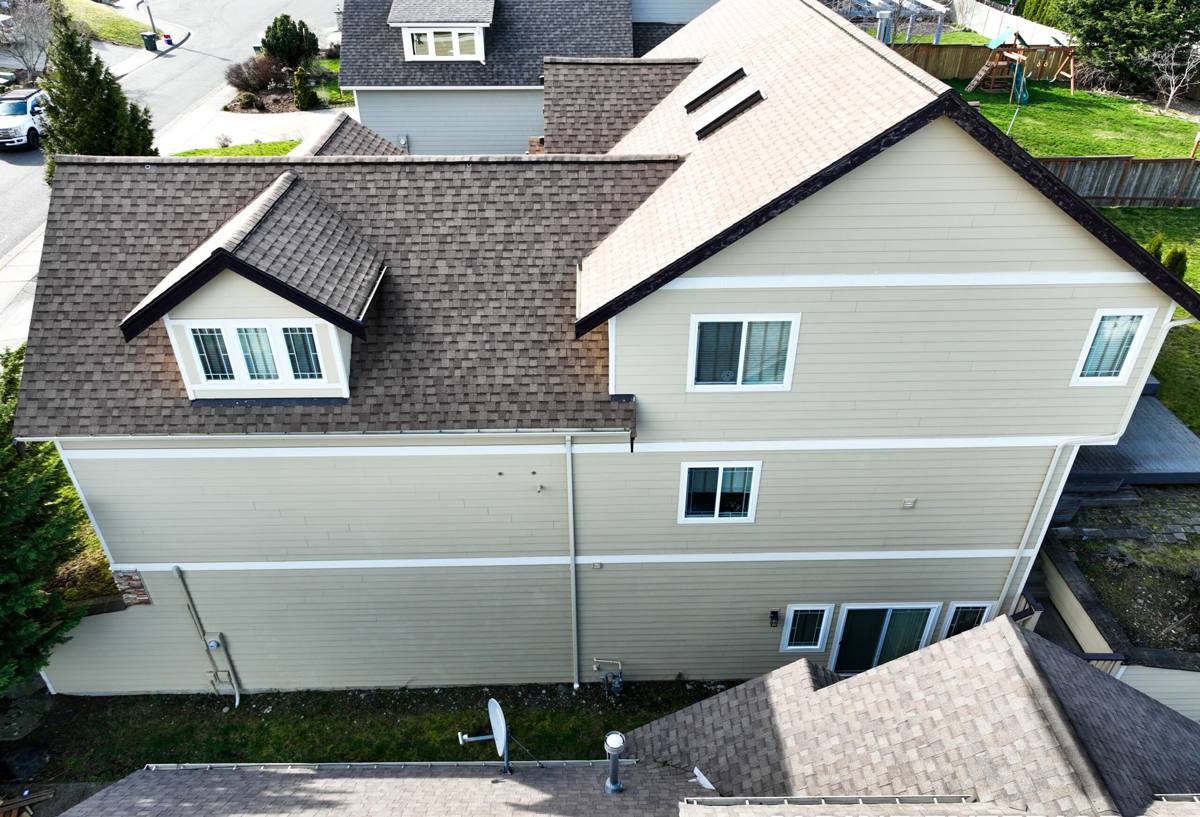
What Delta's Climate Actually Does to a Roof
Salt Air and Metal Corrosion
Coastal and near-coastal air carries fine salt particulate that settles on every exposed metal surface — nail heads, flashing, drip edge, vent stacks, and gutter hardware. Over time, uncoated or thin-gauge metal corrodes faster here than it would inland, and once corrosion starts at a fastener or flashing seam, that's exactly where leaks begin. This is one of the most overlooked factors in roof longevity for homes in this area, because the damage is slow and invisible until a fastener fails or a flashing joint opens up.
Driving Rain and Wind-Driven Moisture
Everett gets weather systems that push rain horizontally, not just straight down. Standard shingle laps and minimal underlayment are designed around gravity-fed water, not water being forced sideways and upward under wind pressure. Roofs in exposed or elevated positions in Delta see this more than roofs tucked into more sheltered lots, and it's a major reason we don't cut corners on underlayment coverage or flashing at transitions.
Moss, Shade, and Moisture Retention
Tree cover and cooler, damp microclimates in parts of Delta create ideal conditions for moss and algae growth on north-facing slopes and shaded valleys. Moss isn't just cosmetic — it holds moisture against the roofing surface, works into shingle laps and granule layers, and accelerates wear well before the shingle's rated lifespan is up. A roof installed without moss-resistant materials or proper ventilation in a shaded Delta lot will show moss growth years sooner than the same roof on an open, sun-exposed lot.
What a Correct Installation Involves Here
A roof that's actually built for Delta's conditions has a few things in common, regardless of which material a homeowner chooses:
- Full underlayment coverage — synthetic underlayment across the entire deck, not just felt at the field, to buffer against wind-driven rain finding gaps in the primary roofing layer.
- Ice-and-water shield at vulnerable zones — valleys, eaves, and around penetrations, where wind-driven moisture and ponding are most likely to force water backward under the shingles.
- Corrosion-resistant metal — flashing, drip edge, and fasteners rated for coastal-adjacent exposure rather than standard-grade galvanized components that corrode faster in salt air.
- Balanced attic ventilation — intake and exhaust sized to keep the underside of the deck dry, which reduces the moisture buildup that feeds moss and rot from below.
- Moss-resistant shingle options — algae-resistant granules where the roof has shaded or north-facing sections, particularly relevant on tree-covered Delta lots.
- Properly sealed penetrations — every pipe boot, vent, and skylight curb flashed and sealed to a standard that accounts for both wind pressure and long-term UV and moisture exposure.
Choosing a Roofing Material for This Neighborhood
There's no single "best" roofing material for every home — it depends on the home's structure, budget, and how exposed the roof is to wind, shade, and salt air. Here's how the common options compare specifically against Delta's conditions:
| Material | Salt Air Durability | Moss Resistance | Wind-Driven Rain Performance | Typical Lifespan |
|---|---|---|---|---|
| Architectural asphalt shingle | Good, with corrosion-resistant flashing | Good with algae-resistant granules | Good with full underlayment system | 25-30 years |
| Standing seam metal | Very good with proper coating spec | Excellent — sheds moisture, little surface for moss to grip | Excellent | 40-50+ years |
| Composite/synthetic shake | Good | Good to very good depending on product | Good | 30-50 years |
| Cedar shake (untreated) | Fair — requires diligent maintenance | Poor without regular treatment | Fair | 20-30 years with upkeep |
We'll walk through these trade-offs honestly during an estimate. A well-installed asphalt system with the right underlayment and flashing package performs very well for most Delta homes and budgets; metal is worth discussing for homes with heavy shade, low-slope sections, or owners planning to stay long-term and wanting to minimize moss and maintenance altogether.
Our Installation Process
1. On-Site Assessment
We start by walking the roof and attic, not just looking from the ground. We check deck condition, existing ventilation, signs of past moss or moisture damage, and how exposed the roof is to wind and shade given the specific lot and tree cover. This tells us what underlayment package, flashing spec, and material options actually make sense for that house.
2. Tear-Off and Deck Inspection
Old roofing comes off down to the deck, and we inspect the sheathing for soft spots, rot, or prior moisture damage — common in older Snohomish County homes where ventilation was never quite right. Any damaged decking gets replaced before anything new goes down; installing new roofing over a compromised deck just hides the problem.
3. Underlayment and Flashing
This is where the Delta-specific spec comes in — full synthetic underlayment coverage, ice-and-water shield at valleys and eaves, and corrosion-resistant flashing and fasteners at every penetration and transition.
4. Roofing Installation
Material goes down to manufacturer specification, with attention to nailing patterns and exposure rates that hold up under wind-driven rain rather than just meeting minimum code.
5. Ventilation Check and Final Walkthrough
We confirm intake and exhaust ventilation is balanced before closing out the job, then walk the finished roof and attic with the homeowner so they know exactly what was installed and why.
Why Local Experience Matters for This Job
A crew that only sees inland, sheltered rooflines will spec a roof to code minimums and call it done. A crew that's worked roofs throughout Everett and Snohomish County — including exposed, shaded, and salt-air-affected lots like the ones in Delta — knows where the standard spec falls short and adjusts before problems show up, not after. That shows up in small decisions: which flashing metal to use, where to add an extra course of ice-and-water shield, whether a shaded valley needs a different granule type. Those aren't upsells; they're the difference between a roof that needs attention in year eight and one that doesn't.
Maintenance That Extends the Investment
Even a correctly installed roof benefits from basic upkeep in this climate:
- Keep gutters and downspouts clear so water doesn't back up under eave flashing during heavy rain events.
- Trim back overhanging branches where practical to reduce shade and debris that feed moss growth.
- Have moss treated or gently removed before it builds up thick mats, rather than after it's already lifted shingle edges.
- Schedule a roof check after major windstorms, since wind-driven rain events are when marginal flashing or sealant fails first.
- Have the attic ventilation checked periodically, especially if insulation has been added or altered since the roof was installed.
What Homeowners in Delta Should Ask Before Hiring
Before signing a contract for a new roof, it's reasonable to ask any contractor:
- What underlayment coverage and ice-and-water shield placement do you use for homes in this area?
- What flashing and fastener materials do you use, and are they rated for salt-air exposure?
- How do you handle attic ventilation as part of a roof replacement?
- What's your warranty structure, and does it cover both materials and workmanship?
- Have you installed roofs elsewhere in Delta or similar Everett neighborhoods?
A straight answer to each of these tells you a lot more than a low bid does.
If you're weighing a roof replacement in Delta, we're glad to take a look and give you an honest read on condition, options, and what it would take to do the job right for your specific home. There's a free, no-pressure estimate form below — reach out whenever you're ready.